

Forehead Reduction Scar: Where It Sits and How It Heals
Yes, forehead reduction leaves a scar. It runs along the new hairline, and hair can grow through the incision line and hide it once healed. It starts as a pink line and matures over about one year, but it does not disappear. How fine it becomes depends on your skin, the tension on the closure and your aftercare.
Send your photos on WhatsAppSee healed scar photosMedically reviewed by Op. Dr. Ahmet Dilber, Plastic, Reconstructive and Aesthetic Surgeon · Last reviewed November 2026


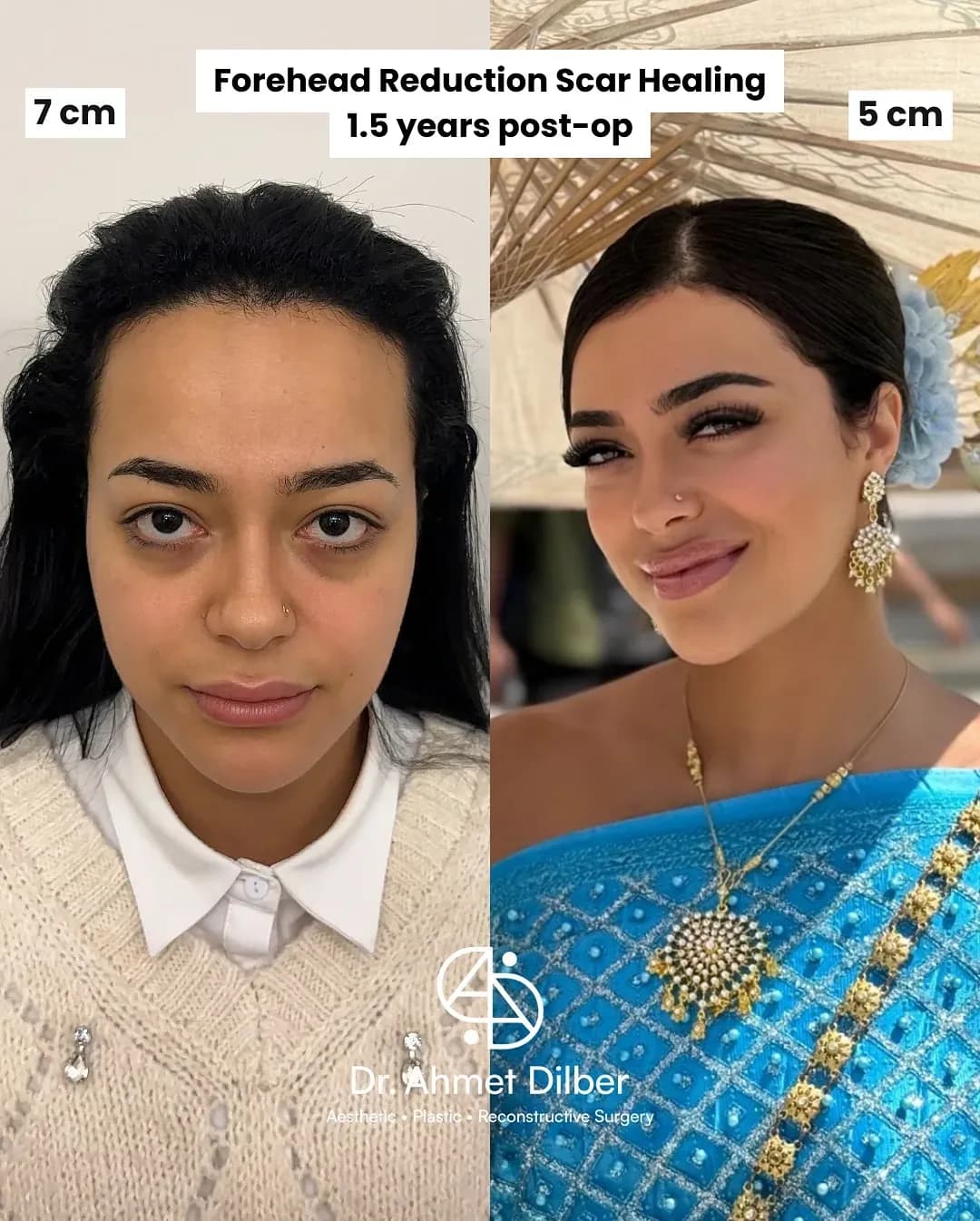
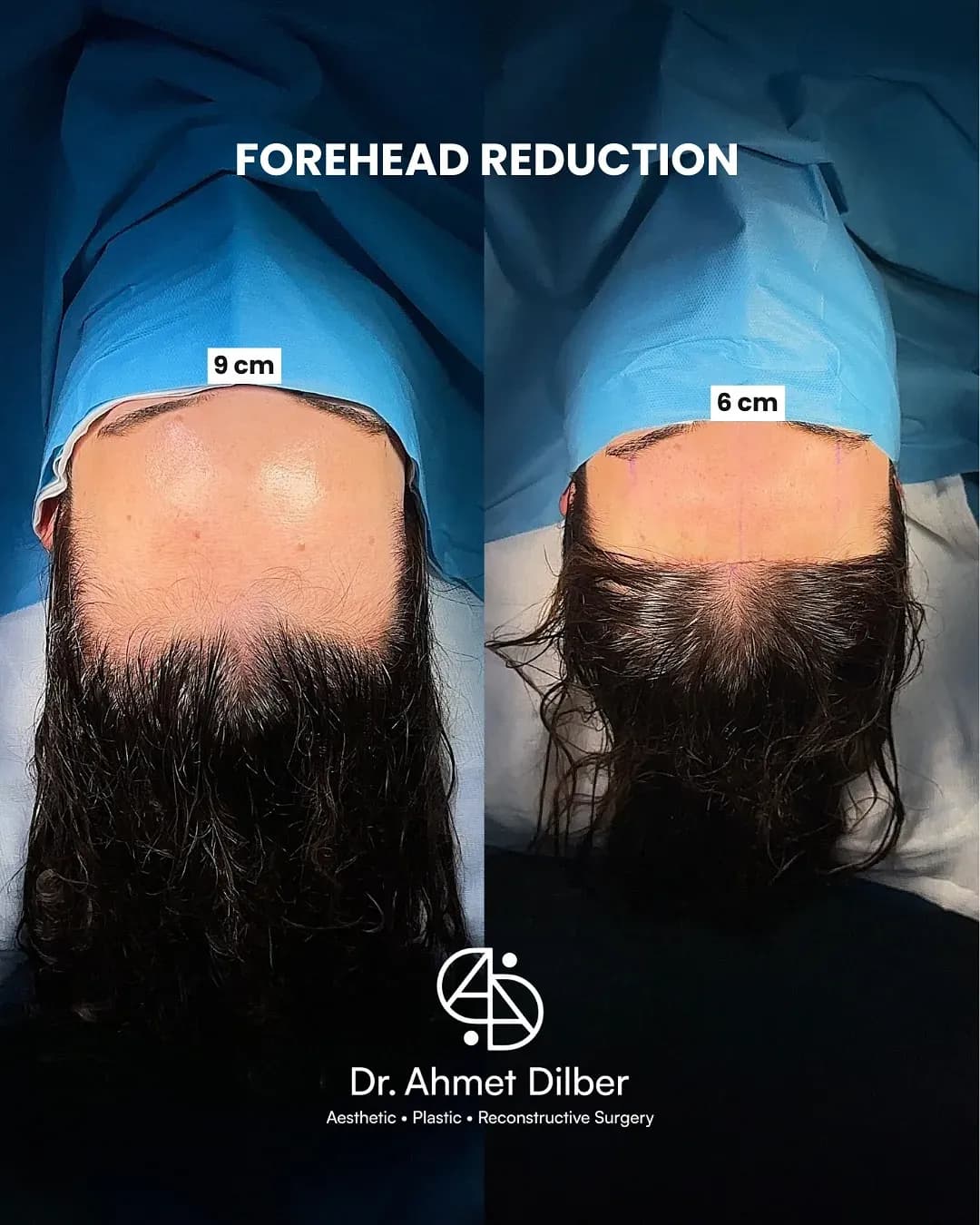
Before and after, forehead reduction. Results vary.
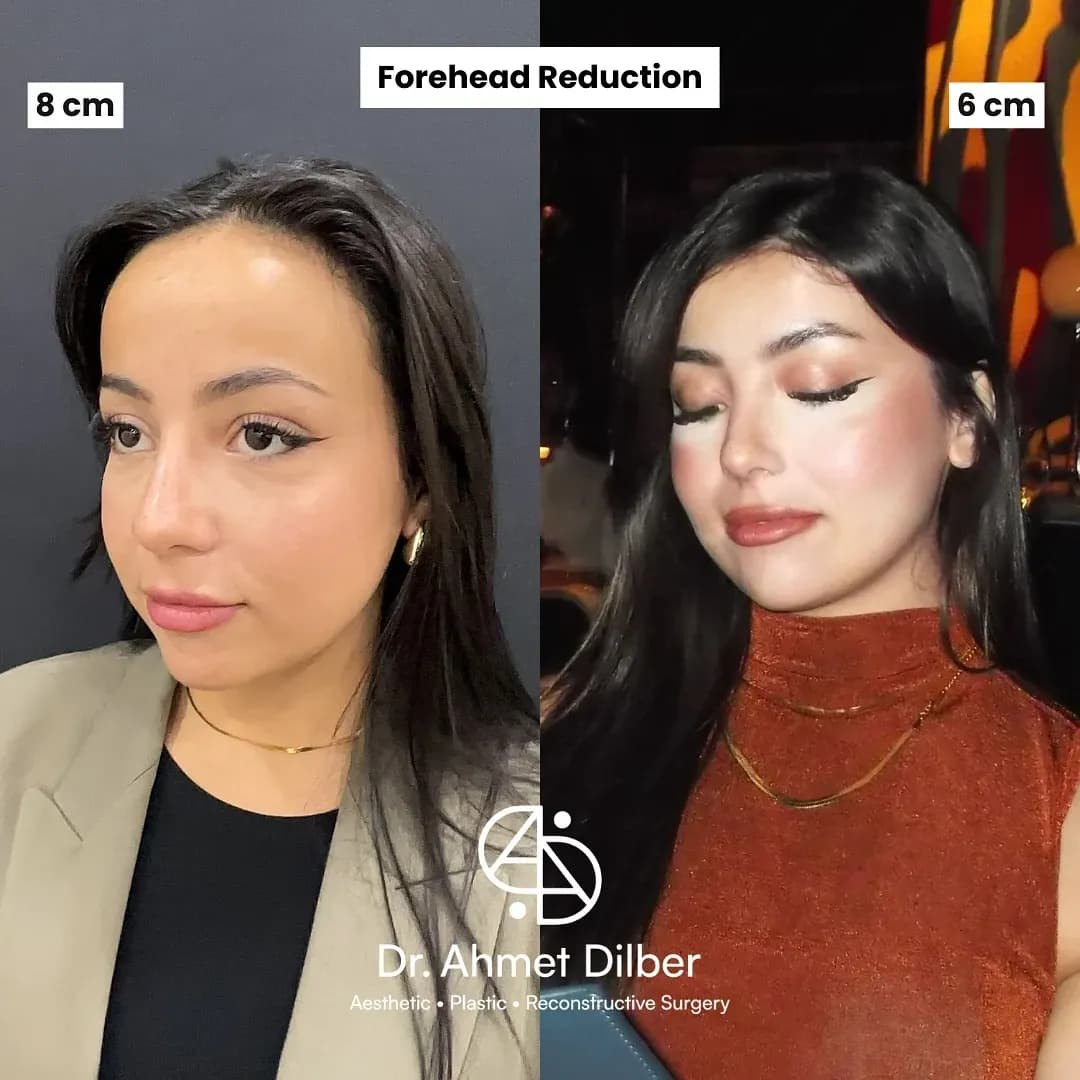
Before and after, forehead reduction. Results vary.
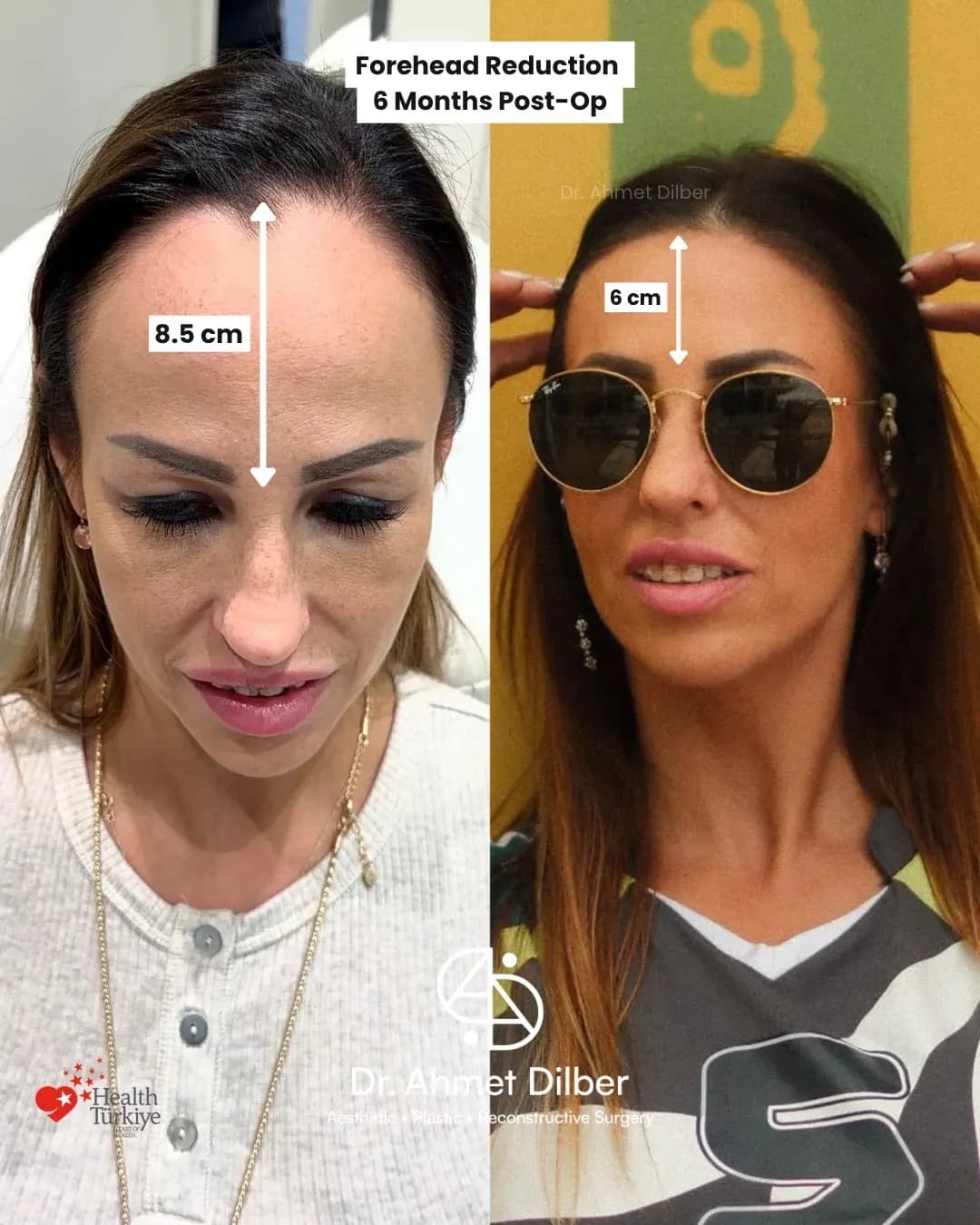
Before and after, forehead reduction. Results vary.



Ratings as of November 2026
Acıbadem Bakırköy
where Dr. Dilber operates, with one night of hospital care
1 year
of follow-up after surgery, in person or on WhatsApp
Licensed
for international health tourism by the Turkish Ministry of Health
Where is the forehead reduction incision, and how is it closed?
The incision runs along your hairline. Through it, Dr. Dilber removes a strip of forehead skin, brings the hair-bearing scalp forward and closes the wound with dissolvable sutures, which dissolve within about 6 months. The scar therefore sits at the new hairline, not in the middle of the forehead. Plaster covers the line until day 4, when it is removed at the Ataköy practice and Dr. Dilber checks the wound; you can fly home after that check.
The exact line is planned for you. At your consultation in Ataköy the day before surgery, Dr. Dilber examines your scalp, asks how you usually wear and part your hair, and marks the new hairline. Hair can grow through the incision line, which helps hide it, and because hair length does not matter, this works with short hair too.
Op. Dr. Ahmet Dilber is a plastic, reconstructive and aesthetic surgeon. He sees patients at his practice in Ataköy, Istanbul, and operates at Acıbadem Bakırköy Hospital. Read more about Dr. Dilber, or see the forehead reduction overview for the whole procedure.



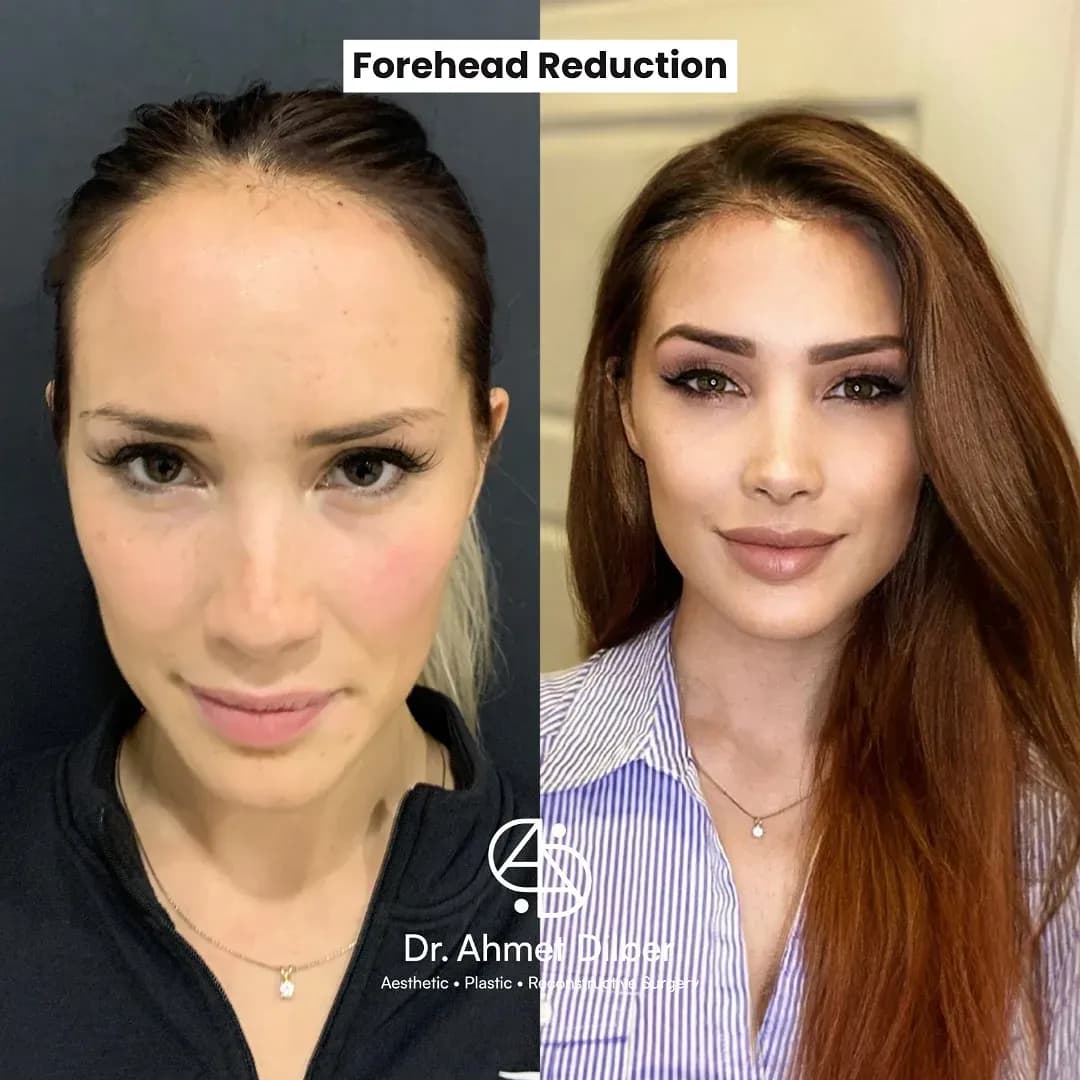
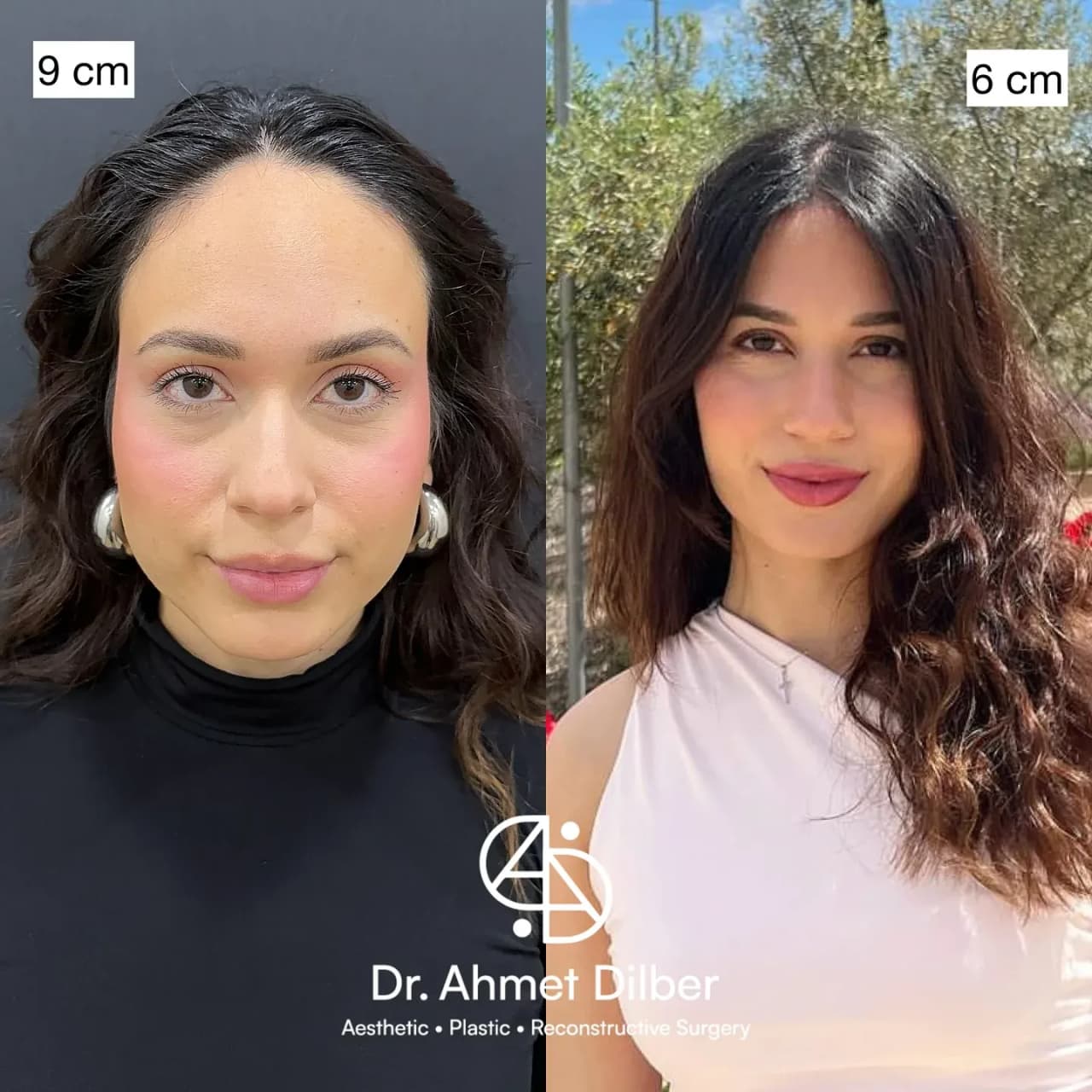
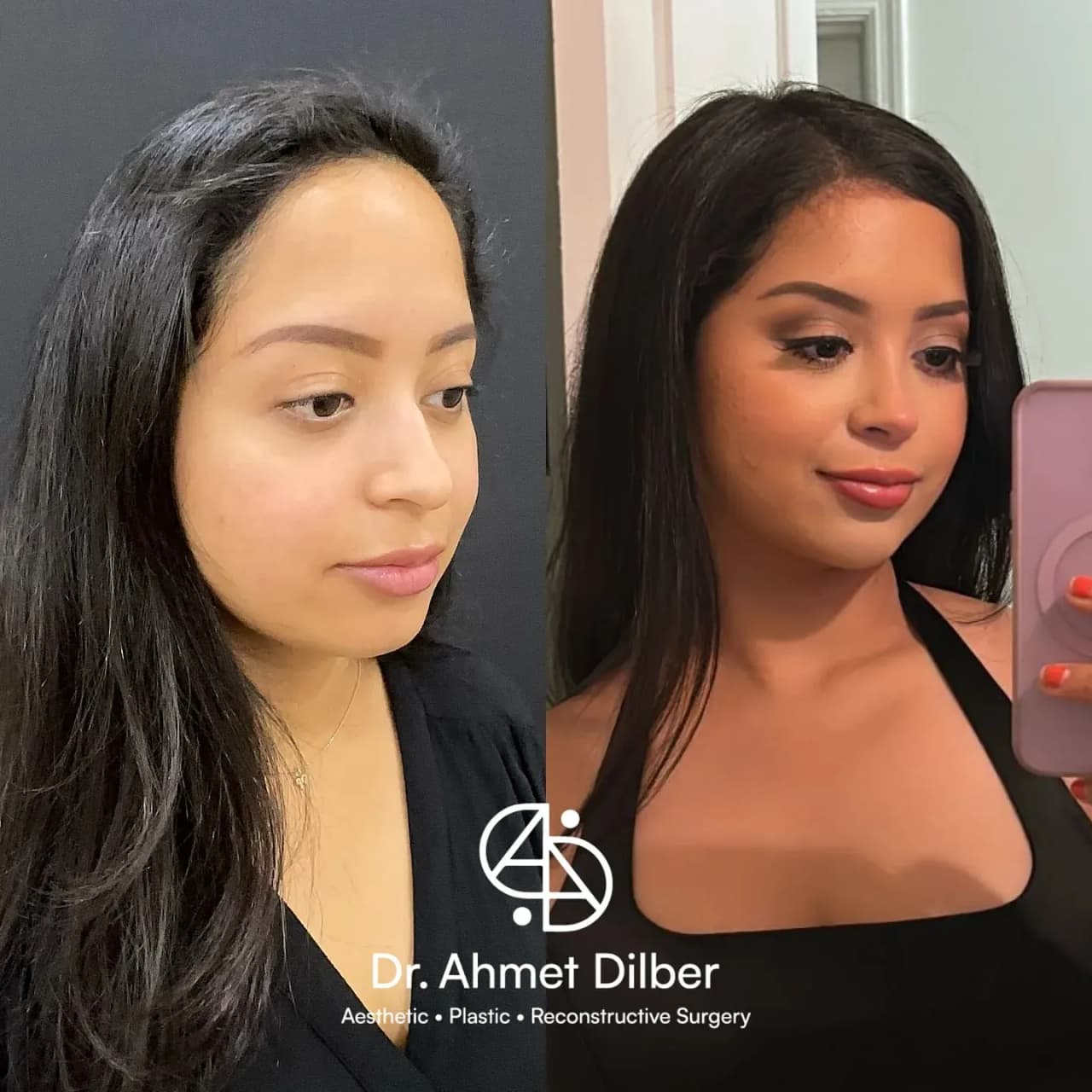

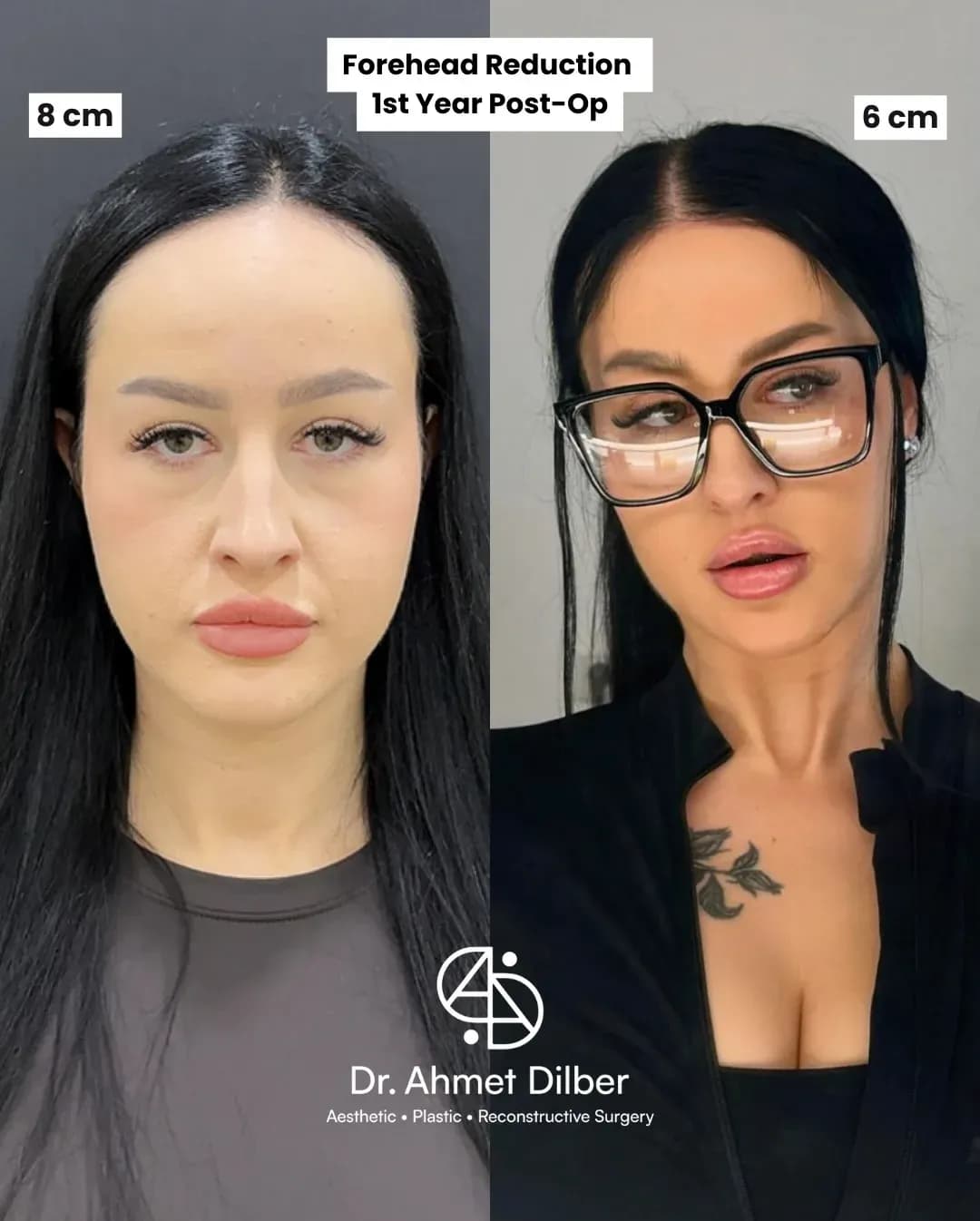
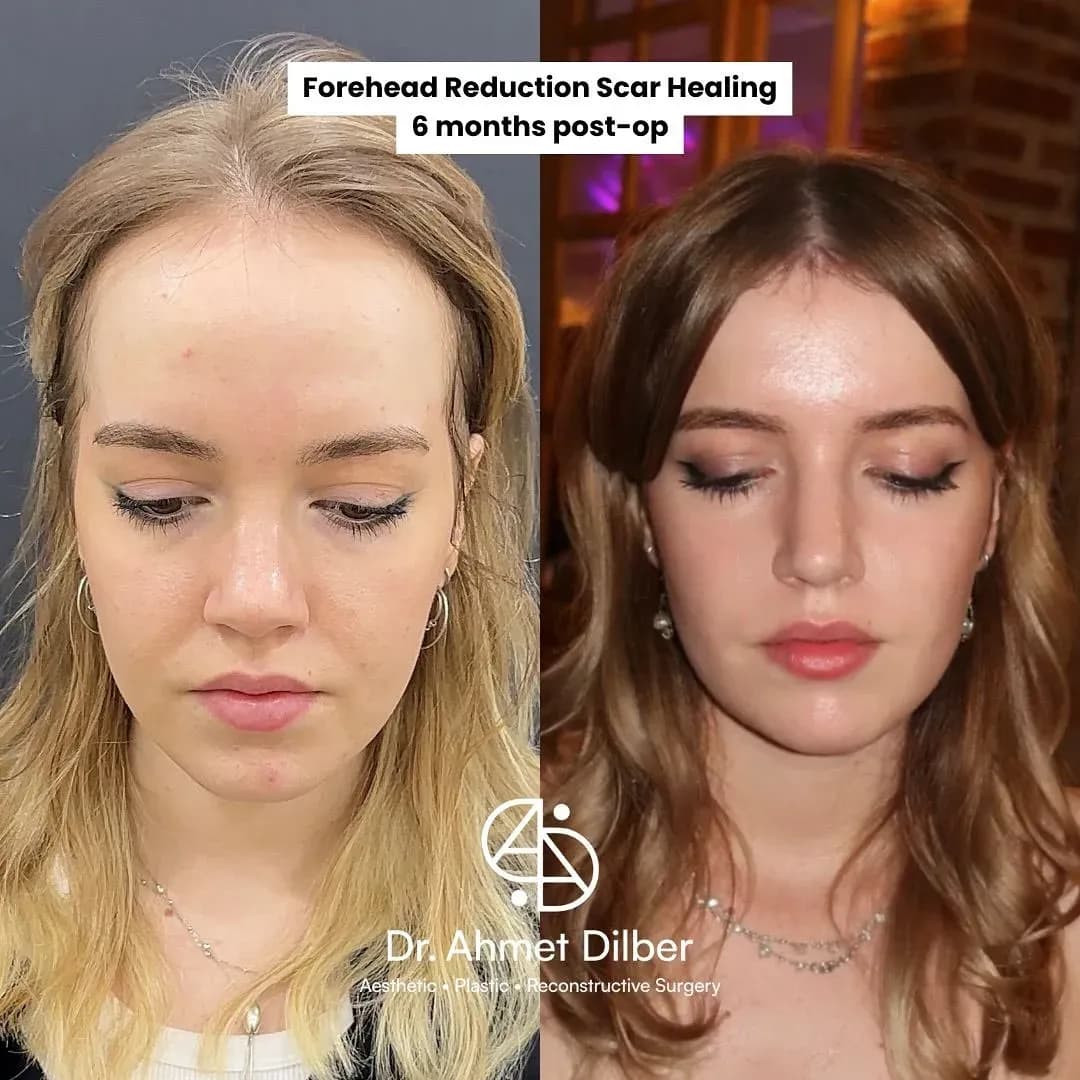
Before and after photos of Op. Dr. Ahmet Dilber's patients, from @drahmetdilber on Instagram. Results vary.
How does a forehead reduction scar change over time?
In the first days the incision is a closed line under plaster. Once the plaster comes off on day 4, it usually looks pink or red and may feel firm or slightly raised. Over the following months the colour fades and the line softens and flattens, and the scar matures over about one year. The NHS says most scars fade over time, but you cannot get rid of a scar. How far yours fades depends on your skin, the tension on the closure and how well it is protected while it heals.
Two things are often confused: wound closure and scar maturity. A wound is closed when the skin has sealed. A scar is mature when its colour and texture stop changing. A small area that stays open, weeps or opens again is a wound problem, not a stage of scar maturation; send photos on WhatsApp straight away. Dr. Dilber and his assistants review your scar from photos at 1, 3, 6 and 12 months. The table separates practice protocol from what depends on your skin.
Forehead reduction scar timeline
Day 0 to 4
What happens: Dissolvable sutures under plaster; soft head band allowed from day 1
Source: Practice protocolDay 4
What happens: Plaster removed in Ataköy, wound checked; you can fly home
Source: Practice protocolFrom day 4
What happens: Antibiotic cream twice a day for 15 days, then scar gel for at least 2 months
Source: Practice protocolWeeks 1 to 6
What happens: Pink line; scabs off in about 2 weeks; no knocks or strenuous exercise
Source: Practice protocol; appearance variesMonths 1, 3, 6 and 12
What happens: Photo review; redness fades, line softens; sutures dissolve within about 6 months
Source: Review: practice. Appearance: general patternAbout 1 year
What happens: Scar matures; colour and texture settle
Source: General pattern
How should you look after a forehead reduction scar?
These steps follow Dr. Dilber's aftercare advice. The written instructions you receive before leaving Istanbul take priority.
Keep the plaster on until day 4
Leave the plaster in place until it is removed at the Ataköy practice on day 4. You can shower from day 2 with warm or cold water; avoid exposing your scalp to hot water or hot air from blow-drying. Use shampoo only, with no conditioner or hair oils, in the first month.
Keep the suture line clean
Keep the incision clean as your written instructions describe. After the plaster comes off, apply the antibiotic cream Dr. Dilber prescribes twice a day for 15 days, then the scar gel twice a day for at least 2 months. Ask before adding any other product. The sutures dissolve on their own within about 6 months, so nothing needs removing.
Protect the forehead from knocks
Avoid any knock or pressure on the incision while it heals. You need to wait 6 weeks before strenuous exercise, which also limits strain on the closure.
Keep the scar out of the sun
New scars can darken in sunlight. Use SPF 50+ on the line for 6 to 12 months, and wear a loose hat once the plaster is off. Make-up can go on the scar after 3 to 4 weeks.
Hair band now, wig later
A soft hair band can be worn from day 1, covering the plaster until the day 4 check. Wait longer before wearing a wig; ask Dr. Dilber when. For 6 weeks avoid ponytails, tight clips or extensions that pull the hairline; you can dye your hair after 6 weeks.
Send photos at set intervals
Photograph your hairline with your hair pulled back at 1, 3, 6 and 12 months and send the photos on WhatsApp. Dr. Dilber and his assistants review how the scar is healing and adjust creams or medication if needed.
Your stay in Istanbul
You see Dr. Dilber at his practice in Ataköy, have surgery at Acıbadem Bakırköy Hospital and can stay at a nearby hotel.

The practice in Ataköy 
Acıbadem Bakırköy Hospital 
Patient room 
Hotel room, on request
Will hair grow through the scar?
Yes, it can. Hair in front of and behind the incision covers the scar once it heals, which is why the line sits at the hairline, and hair can also grow through the incision line itself. This makes the line harder to see, especially with hair worn back. Because hair length does not matter, this also helps if you wear your hair short.
Thinning along the frontal hairline or on the crown can appear around month 3 and mostly recovers by month 6, although hair loss along the incision can occasionally be permanent. Dr. Dilber reviews hair growth along the line at each follow-up photo check. If you have had a hair transplant, tell the team before your photo review; see forehead reduction with or after a hair transplant.
What if the scar stays visible or a problem appears?
Any cosmetic surgery carries risks. For forehead reduction they include bleeding, infection, numbness or altered sensation behind the hairline, a visible or widened scar, hair loss along the incision, an uneven hairline and the need for revision. Dr. Dilber explains each one in person at your consultation in Ataköy before you agree to surgery.
The scar matures over about one year, so judge it once it has settled; Dr. Dilber reviews it at each follow-up check, and Istanbul residents are seen in person. Not every result can be fully corrected. If you notice swelling, pain, warmth, pus or an opening wound after you return home, send photos straight away on WhatsApp (+90 536 296 93 16, answered 07:00 to 24:00 Istanbul time). Dr. Dilber advises on treatment and whether to see a doctor locally. See aftercare after you fly home.
Frequently asked questions about the forehead reduction scar
A scar at three weeks does not show how it will look a year later. Early on it is usually pink and firm; it then fades and softens over about one year, although it never disappears completely. If yours is still red, raised or widening after several months, send photos on WhatsApp. Dr. Dilber reviews whether it is still maturing or needs treatment, and how your recovery is going overall.
Ask the team during your photo review. Useful scar photos show the hairline with hair pulled back, carry the surgery date and the photo date, and use no filters. Another person's scar shows what is possible, not what yours will look like, because skin and healing differ. The before and after page lists dated cases.
A loose hat is a simple way to shade a new scar from the sun, and a soft hair band can be worn from day 1 to cover the line. Avoid anything tight that presses on or rubs the incision, and use SPF 50+ sunscreen on the line too, because thin fabric may not block all sunlight. A wig can come later; ask Dr. Dilber when.
Hair dye can be used after 6 weeks, once Dr. Dilber has reviewed your photos. For the first 6 weeks avoid ponytails, tight styles, clips and extensions that pull the hairline, and brush your hair forward. Skip styling, flat irons and hot blow-drying for 6 weeks, and use shampoo only, without conditioner or hair oils, in the first month. Your written aftercare instructions confirm these limits.
An area that is still open or weeping, or that stays crusted beyond the first 2 weeks, is a wound problem, not a stage of scar maturation. Send clear photos on WhatsApp the same day. Dr. Dilber reviews them, advises on dressings and treatment, and tells you whether to see a doctor locally. Do not apply any cream or other product to an open wound until he confirms it has healed.
No. The incision is closed with dissolvable sutures, which dissolve within about 6 months and are not removed. The plaster over the line comes off on day 4 at the Ataköy practice, when Dr. Dilber checks the wound, and you can fly home after that check. Nothing needs to be taken out once you are home; keep the line clean as your written instructions describe.
A forehead reduction scar matures over about one year. In the first weeks it is pink and may feel firm, and scabs come off in about 2 weeks; over the following months the colour usually fades and the line softens. Use the scar gel Dr. Dilber prescribes and protect the line with SPF 50+ and a hat for 6 to 12 months. Dr. Dilber and his assistants review it from your photos at 1, 3, 6 and 12 months.
Explore the practice
 About Dr. DilberTraining, hospital and how he works with patients from abroad.Read his profile →
 Before and after resultsBefore and after photos of Dr. Dilber's patients. Results vary.See the gallery →
 Patient guide (PDF)The guide we send every patient: timeline, medication, aftercare.Download the guide →
Send three photos. Ask about your scar.
Photograph your forehead from the front, left and right with your hair pulled back. Dr. Dilber reviews them, and the team replies on WhatsApp with his view and the next steps.
