

Forehead Reduction (Hairline Lowering) in Istanbul, Turkey
Forehead reduction surgery in Istanbul lowers a high hairline by removing a strip of forehead skin and moving the hair-bearing scalp forward. Op. Dr. Ahmet Dilber performs it under general anaesthesia in 1.5 to 2 hours, with one night in hospital. The plaster comes off on day 4 at his Ataköy practice, and you can fly home after that check. He decides suitability from your photos first.
Send your photos on WhatsAppSee before and after photosMedically reviewed by Op. Dr. Ahmet Dilber, Plastic, Reconstructive and Aesthetic Surgeon · Last reviewed November 2026


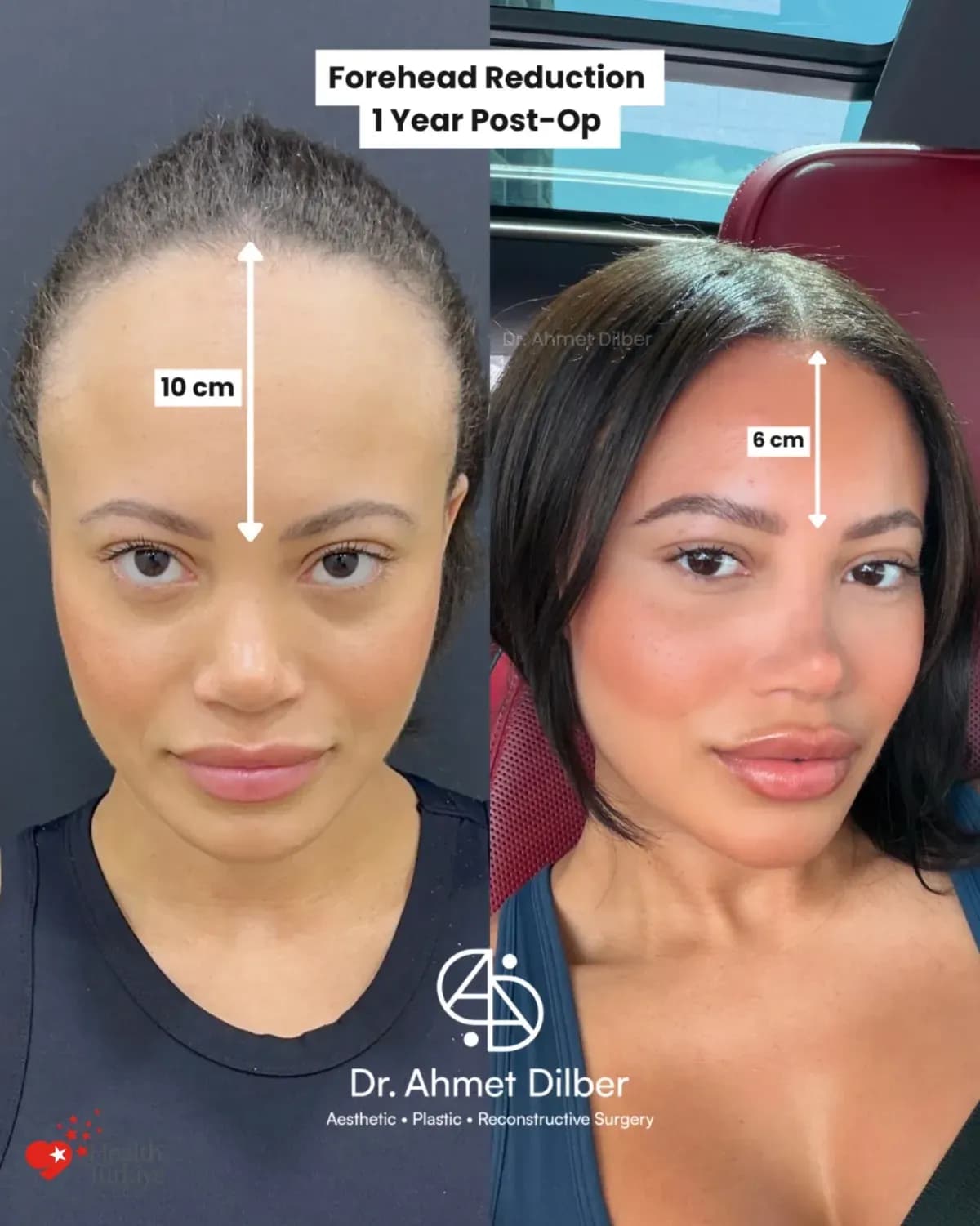
Before and after, forehead reduction. Results vary.
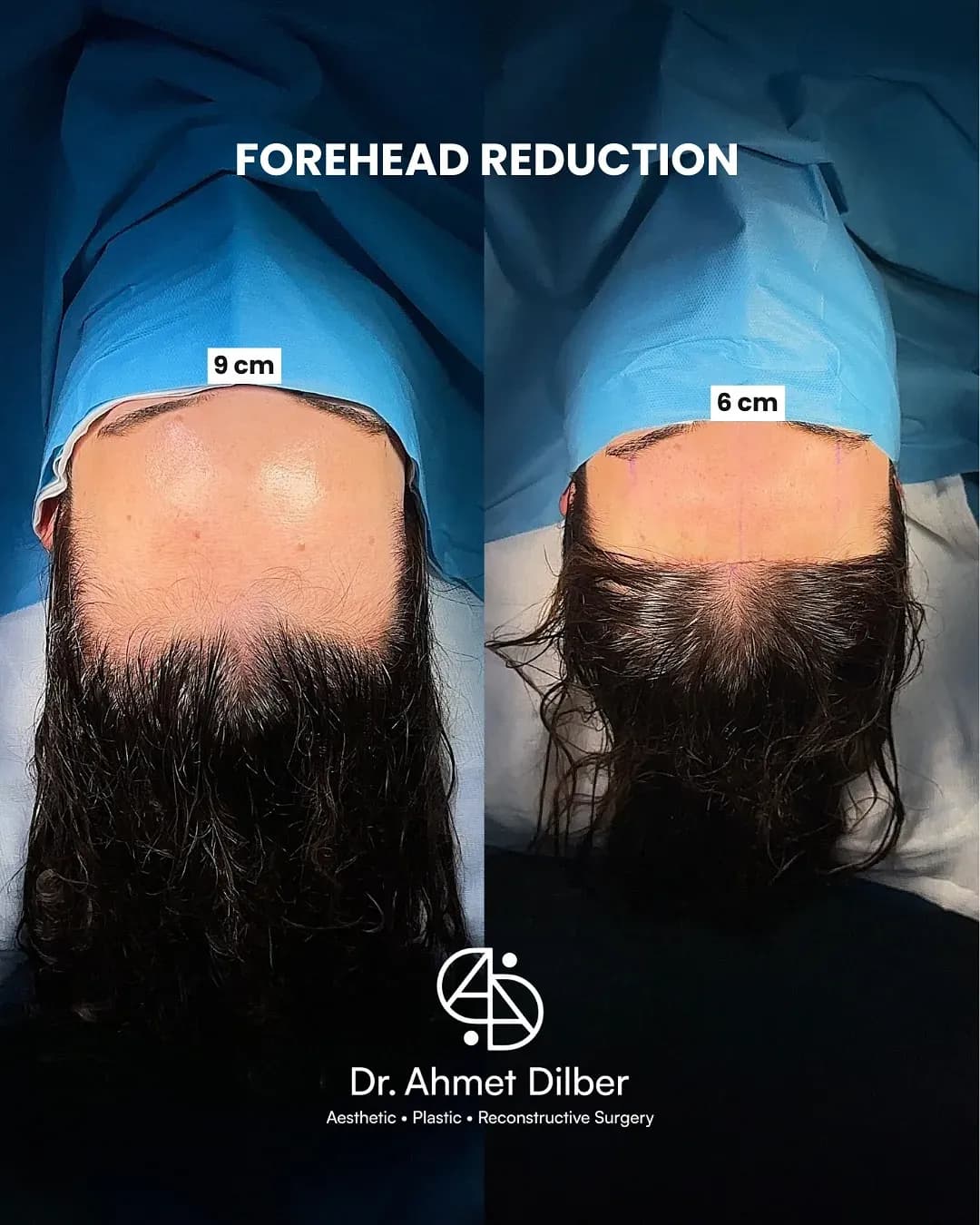
Before and after, forehead reduction. Results vary.
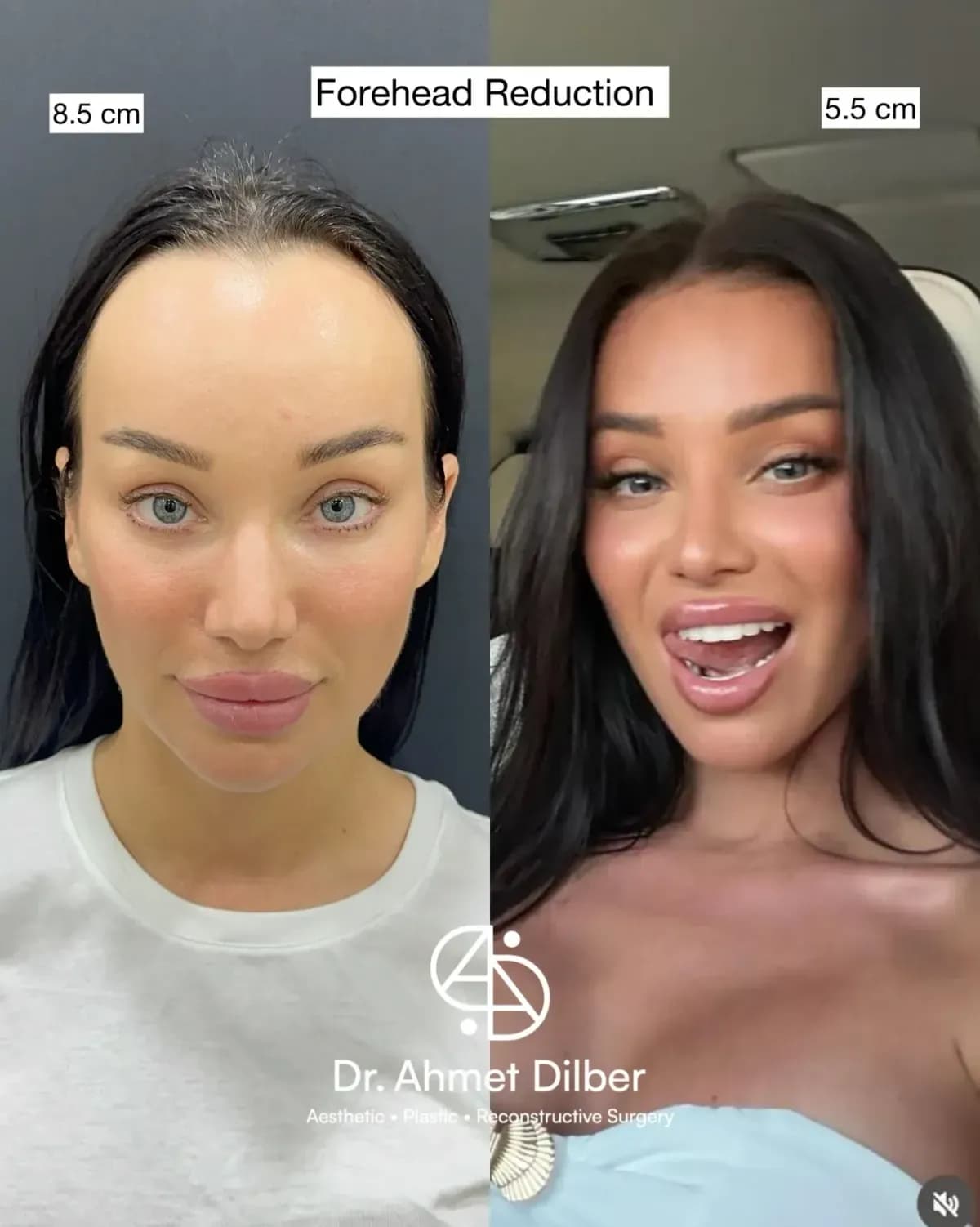
Before and after, forehead reduction. Results vary.
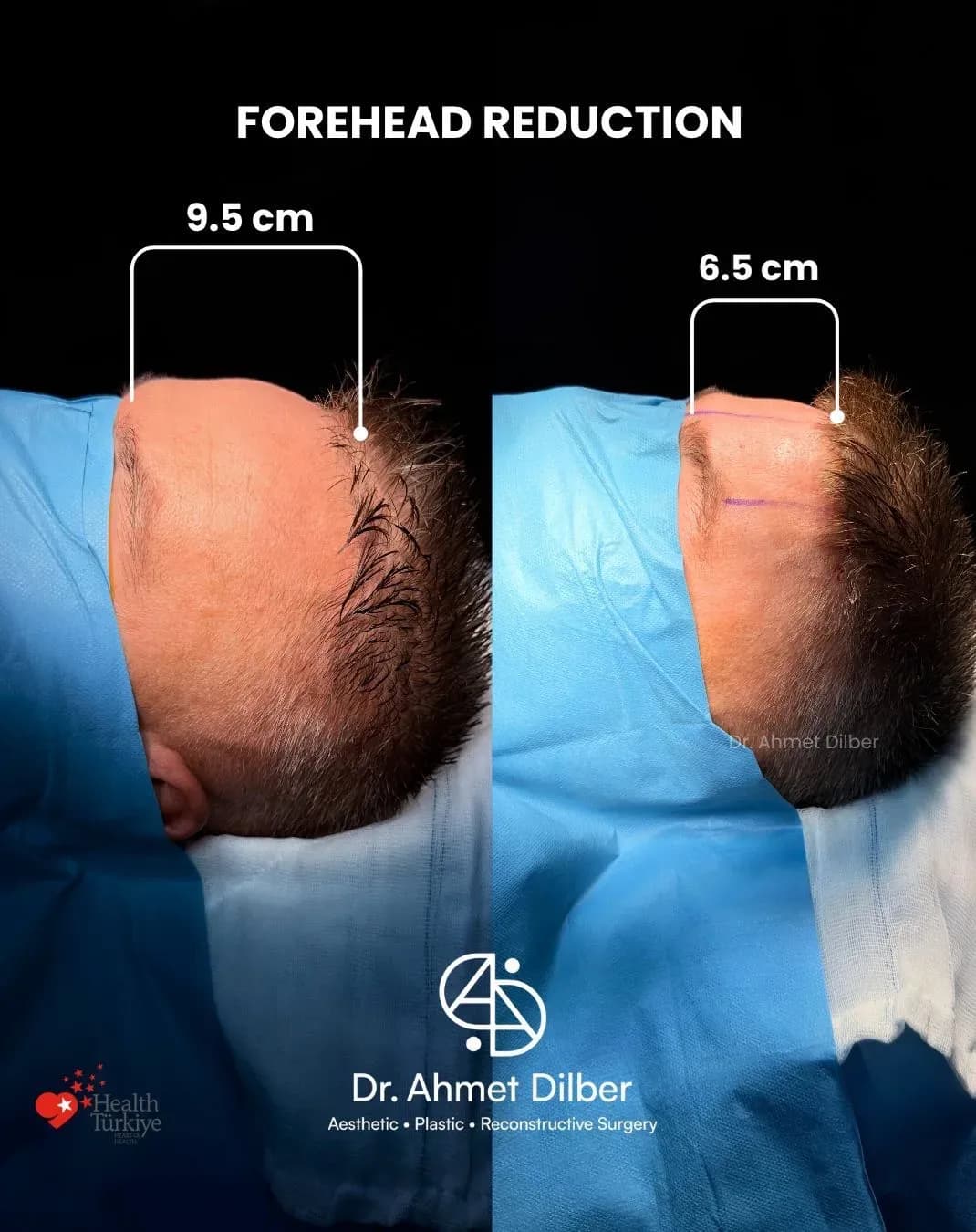
Before and after, forehead reduction. Results vary.
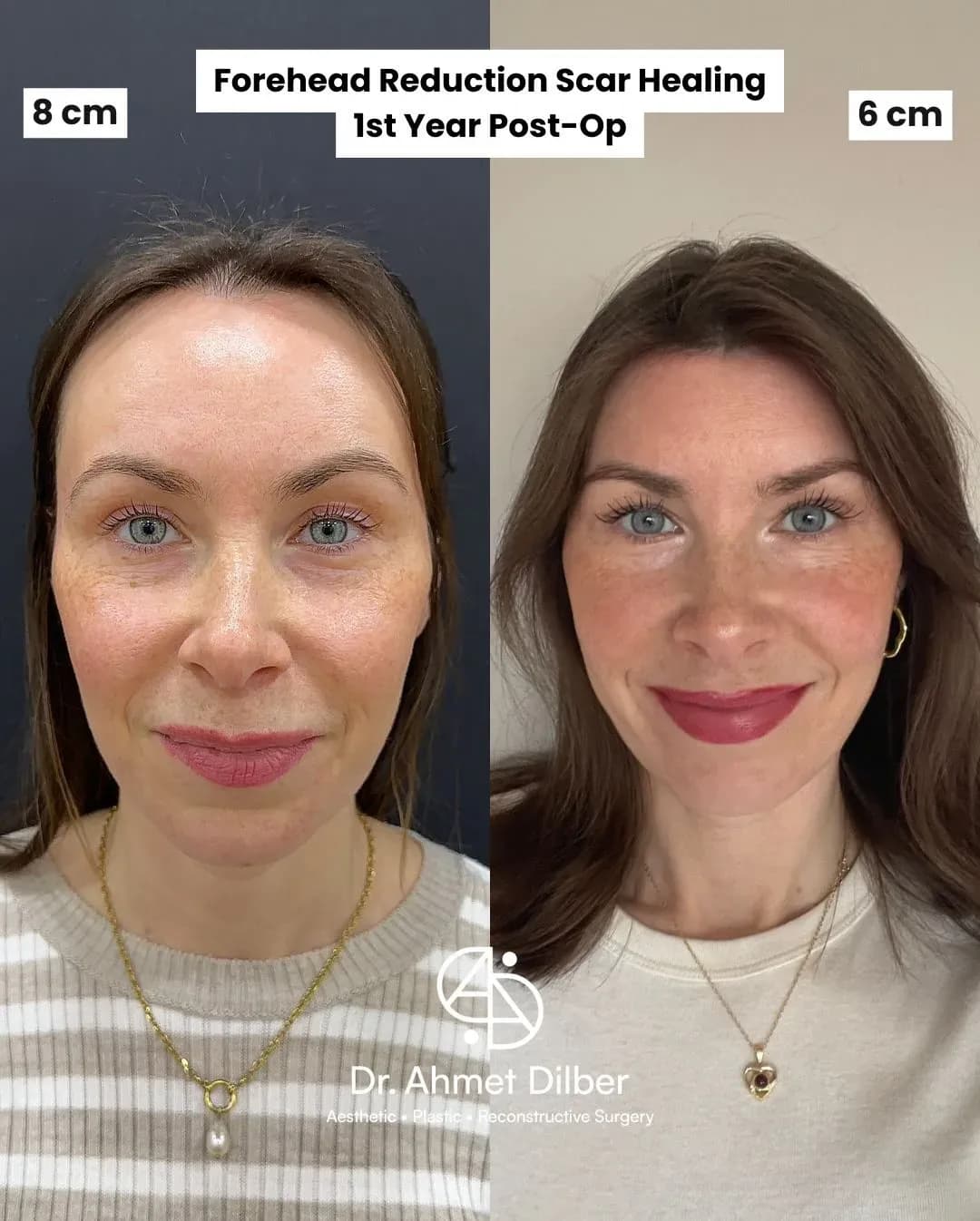
Before and after, forehead reduction. Results vary.



Ratings as of November 2026
Acıbadem Bakırköy
where Dr. Dilber operates, with one night of hospital care
1 year
of follow-up after surgery, in person or on WhatsApp
Licensed
for international health tourism by the Turkish Ministry of Health
What is forehead reduction, and how does Dr. Dilber perform it?
Forehead reduction, also called hairline lowering, shortens the distance between the hairline and the root of the nose. In surgery he makes an incision along the hairline, removes the excess forehead skin, brings the hair-bearing scalp forward and closes the wound with dissolvable sutures. The bone is never touched. The operation takes 1.5 to 2 hours under general anaesthesia.
The result is visible straight away, and hair length does not matter, so it also works with short hair. Forehead reduction is Dr. Dilber's procedure; he does not perform hair transplants. If you later want more density, a hair-transplant clinic can add it about one year afterwards. Forehead reduction does not lift the eyebrows, although a minimal lift can be requested. Read forehead reduction vs hair transplant.
Op. Dr. Ahmet Dilber is a plastic, reconstructive and aesthetic surgeon. He trained at İstanbul University Cerrahpaşa Faculty of Medicine, completed his residency at Okmeydanı Training and Research Hospital and sees patients at his private practice in Ataköy. Read more about Dr. Dilber.



Forehead reduction results
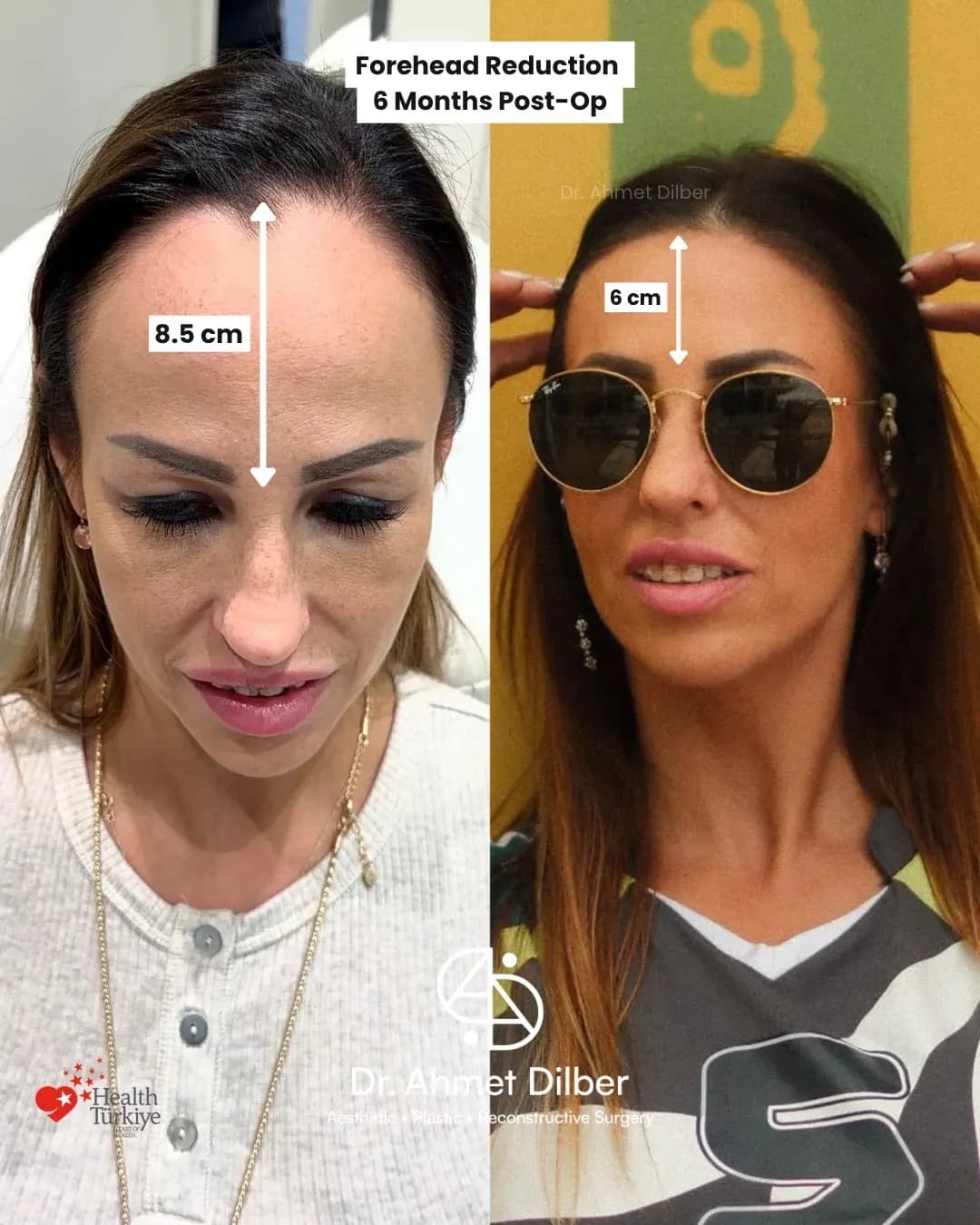
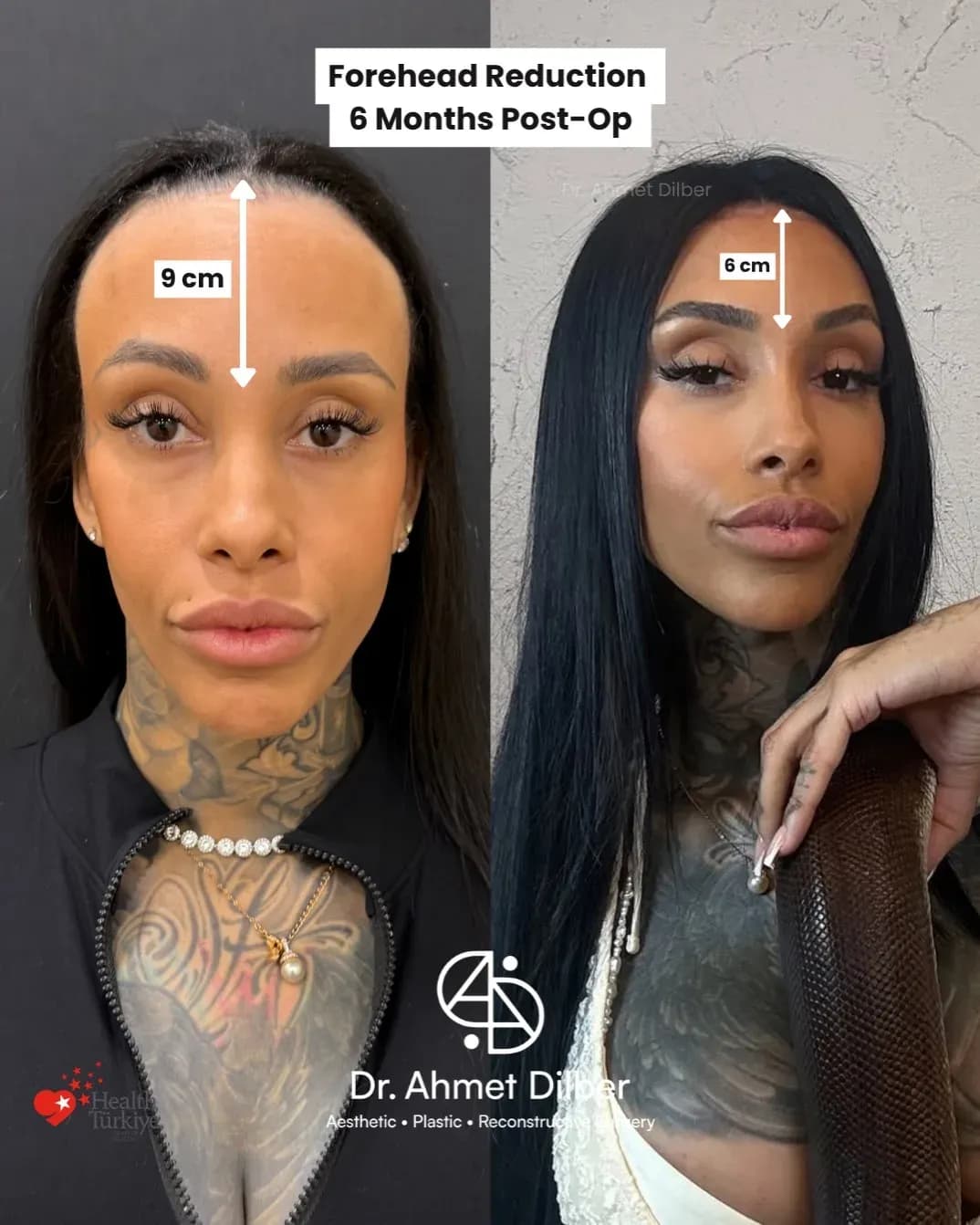
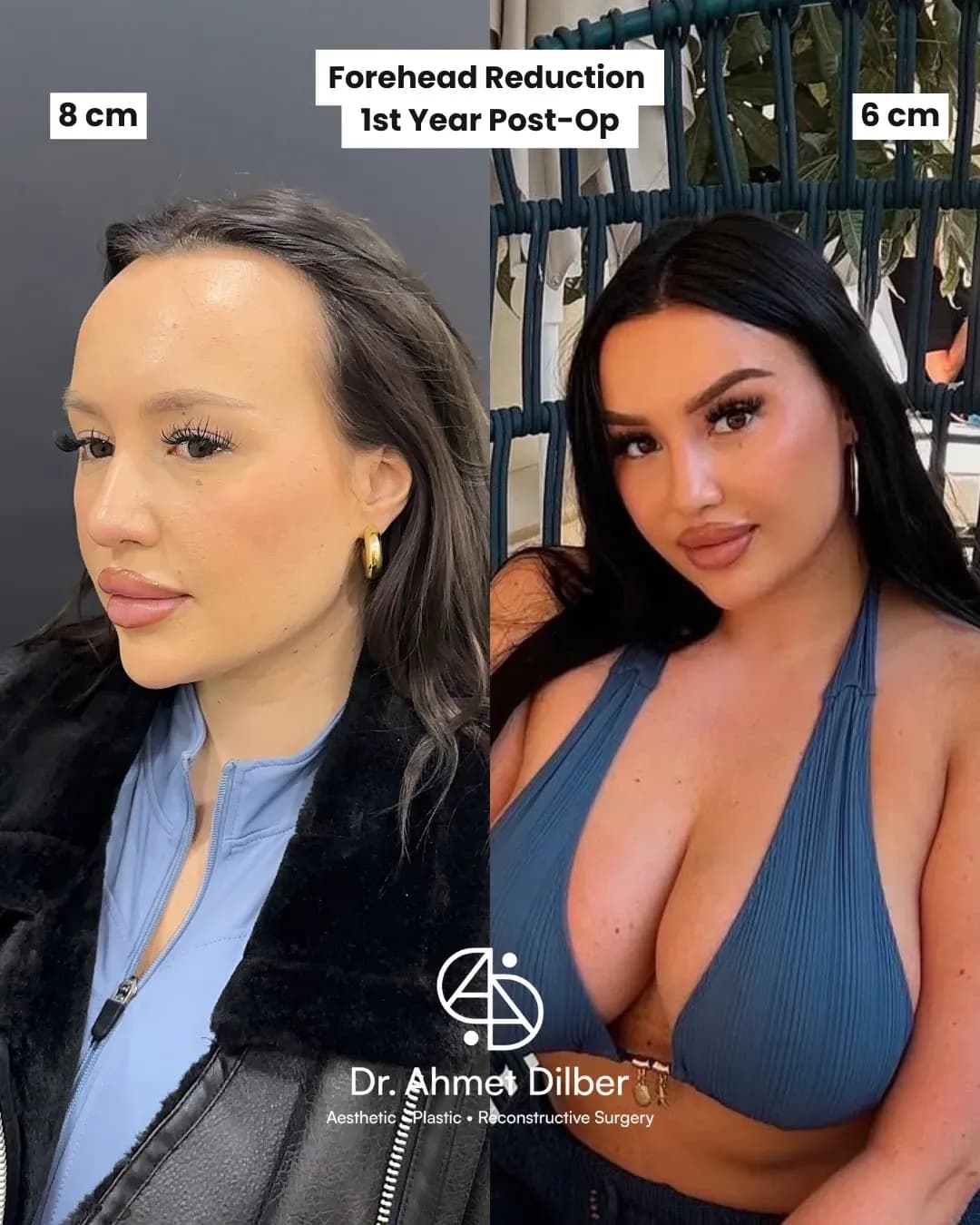
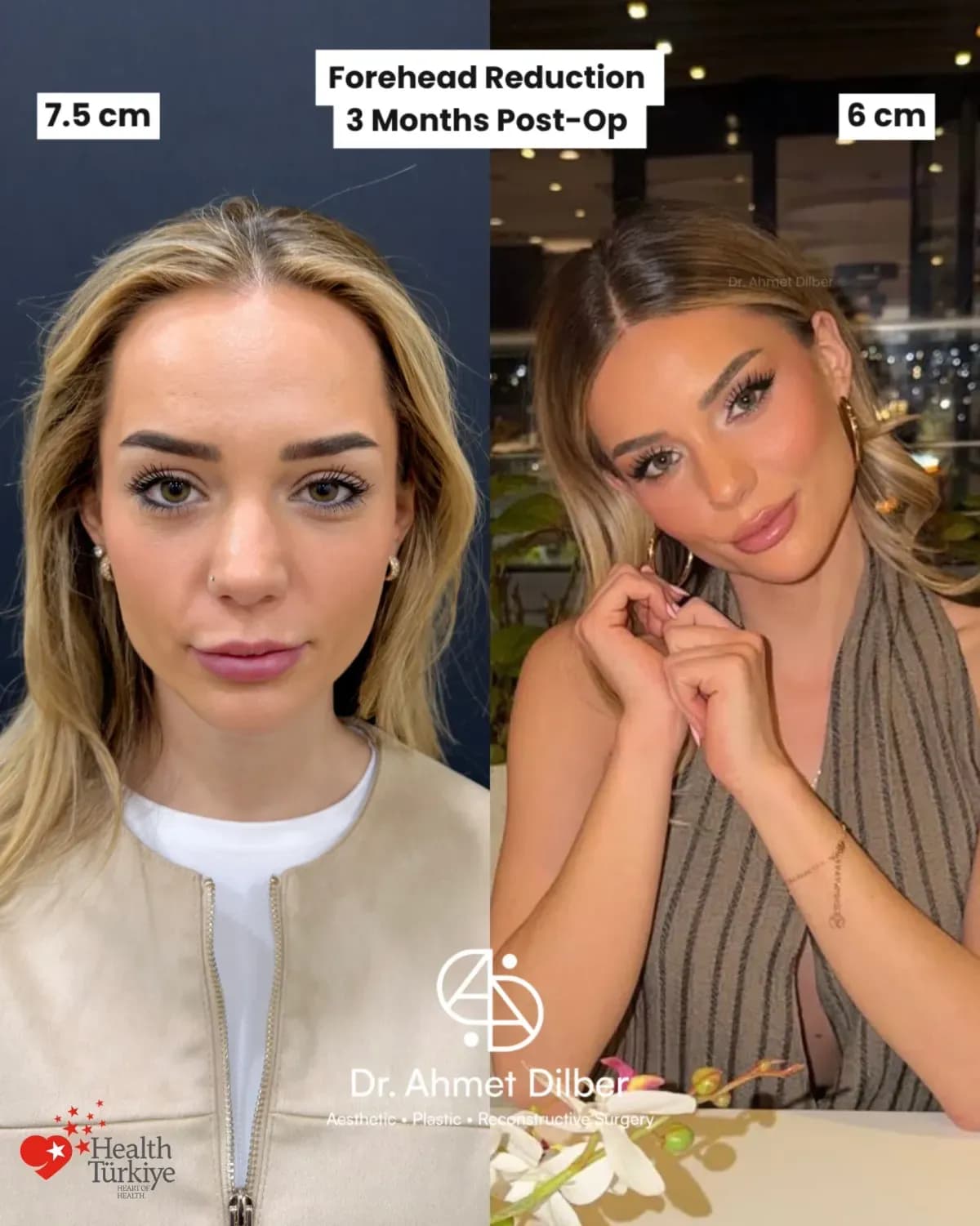
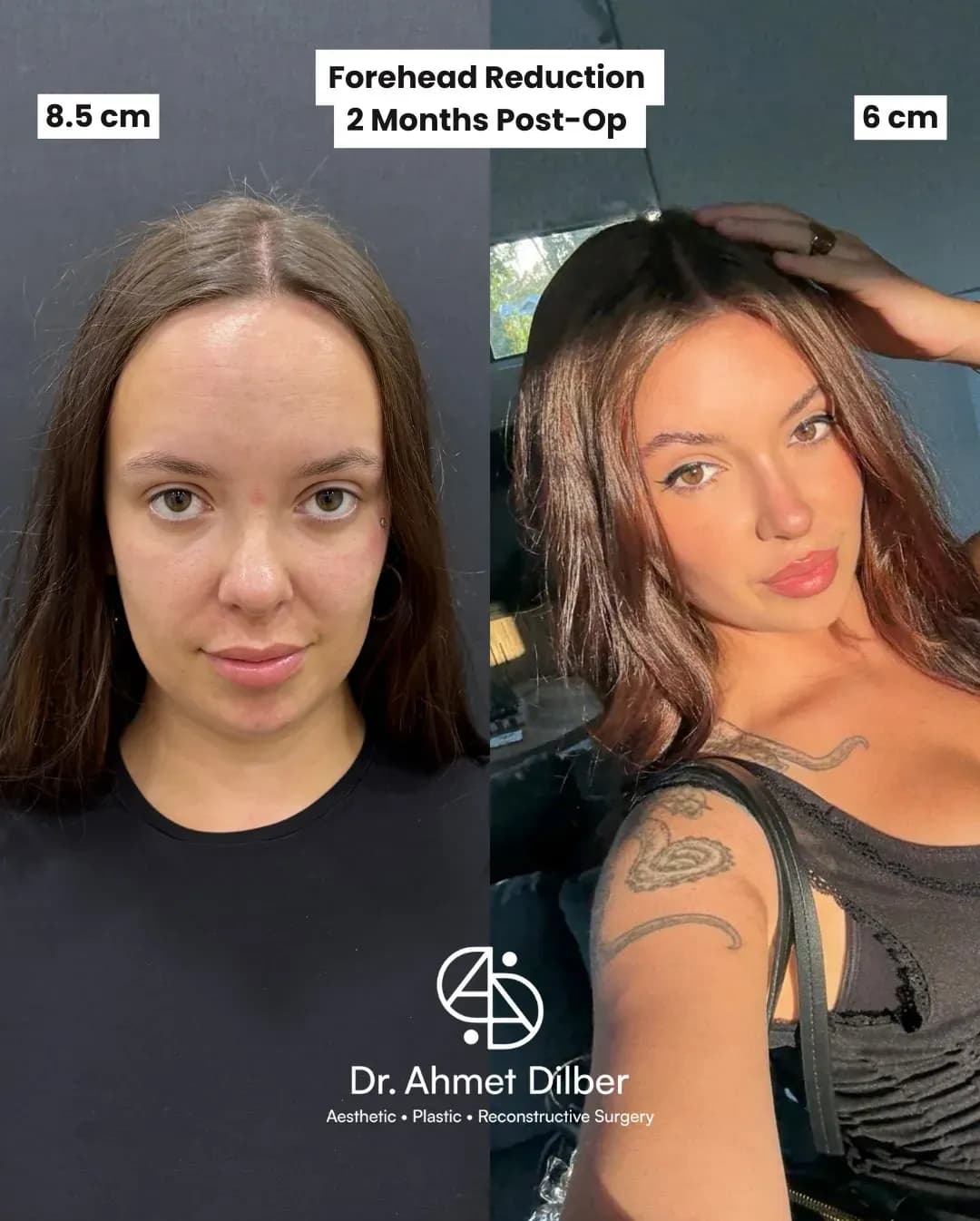
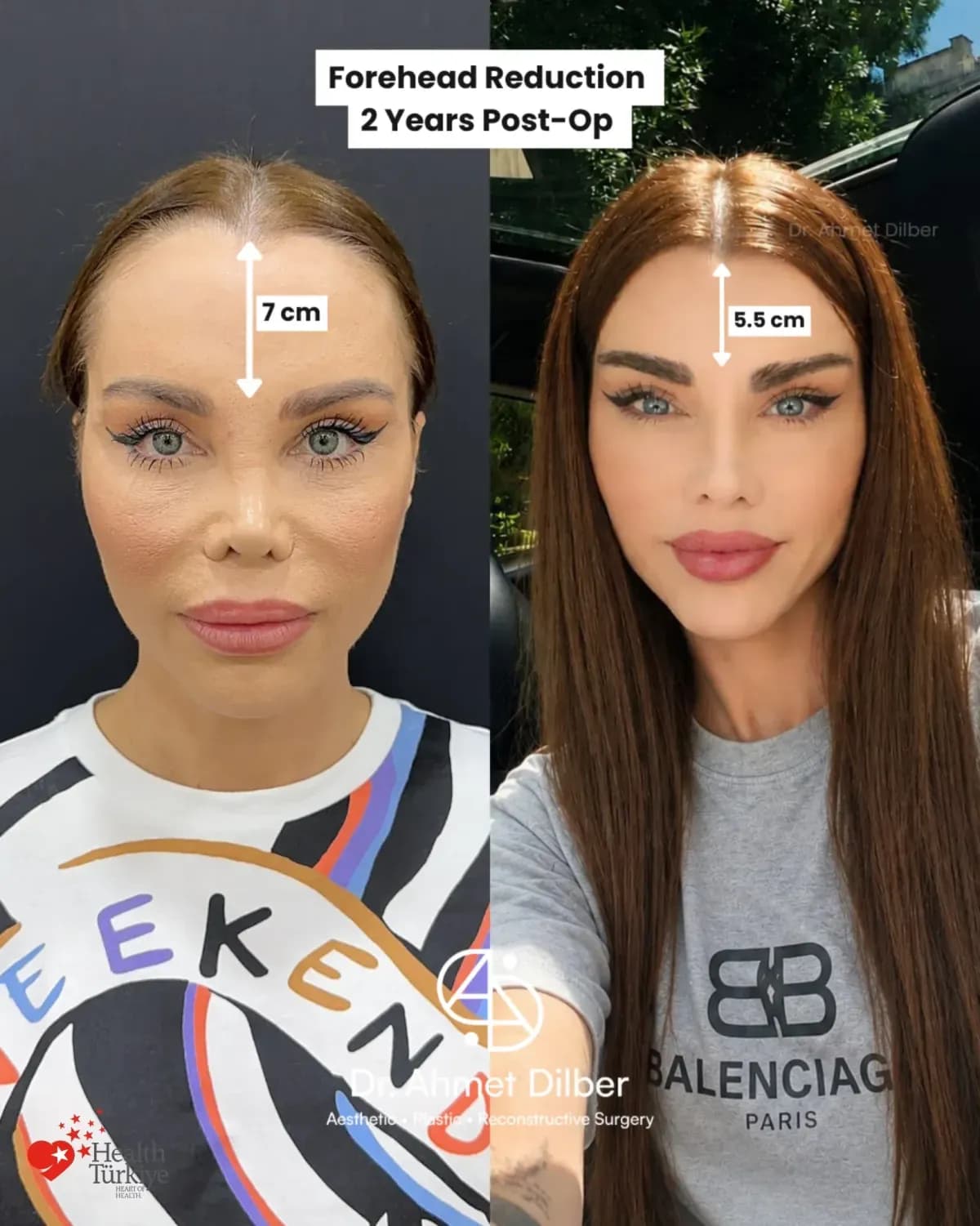
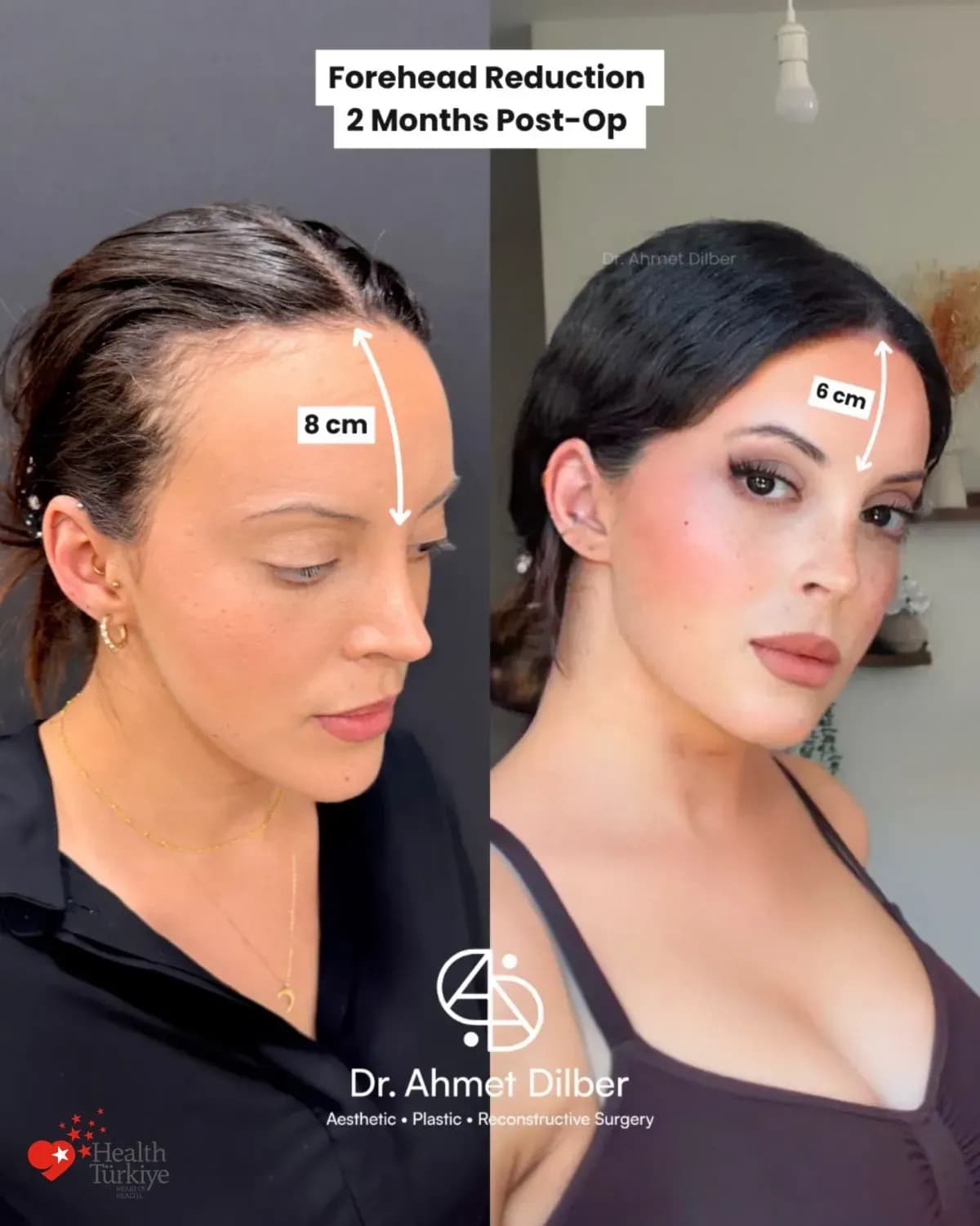
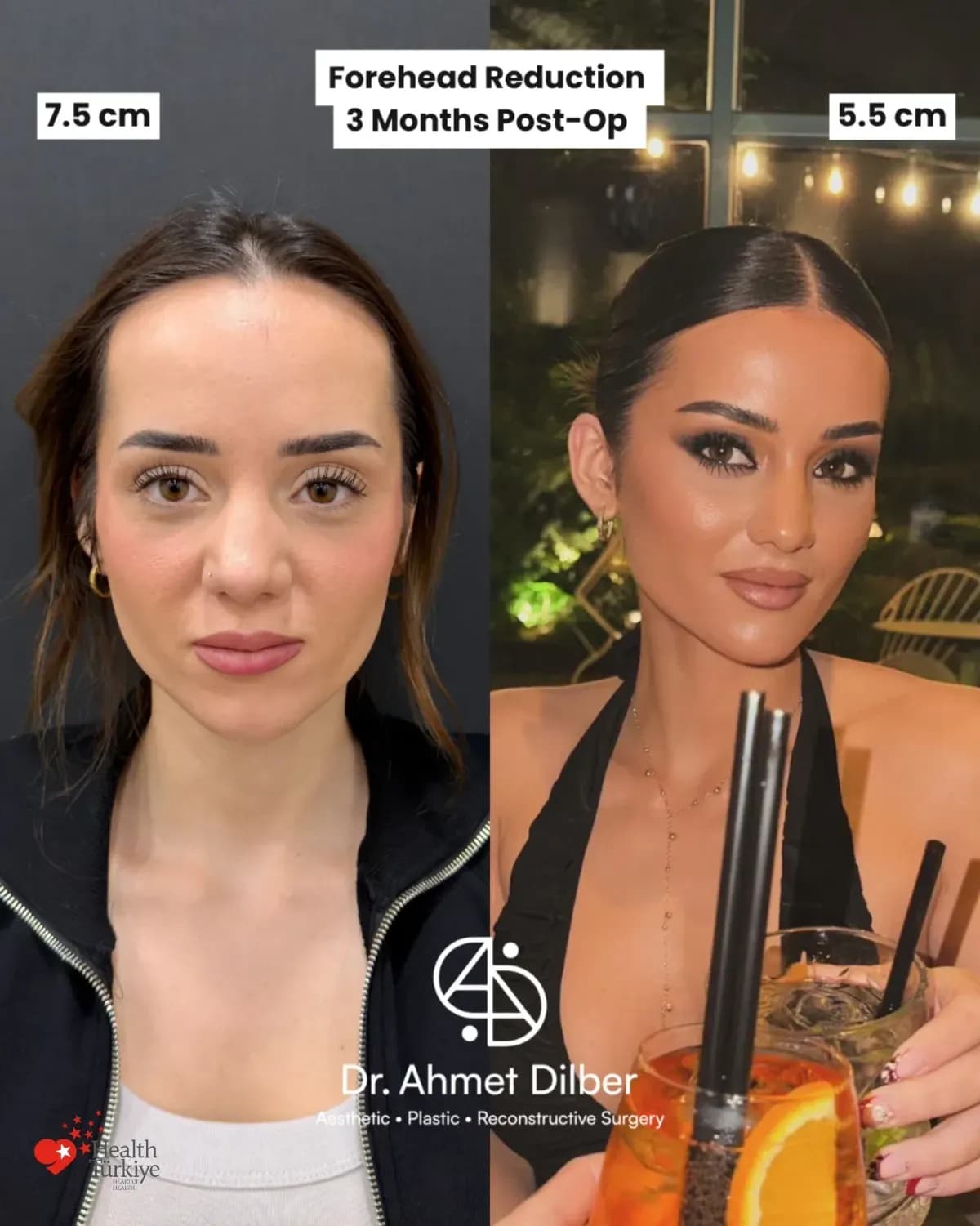
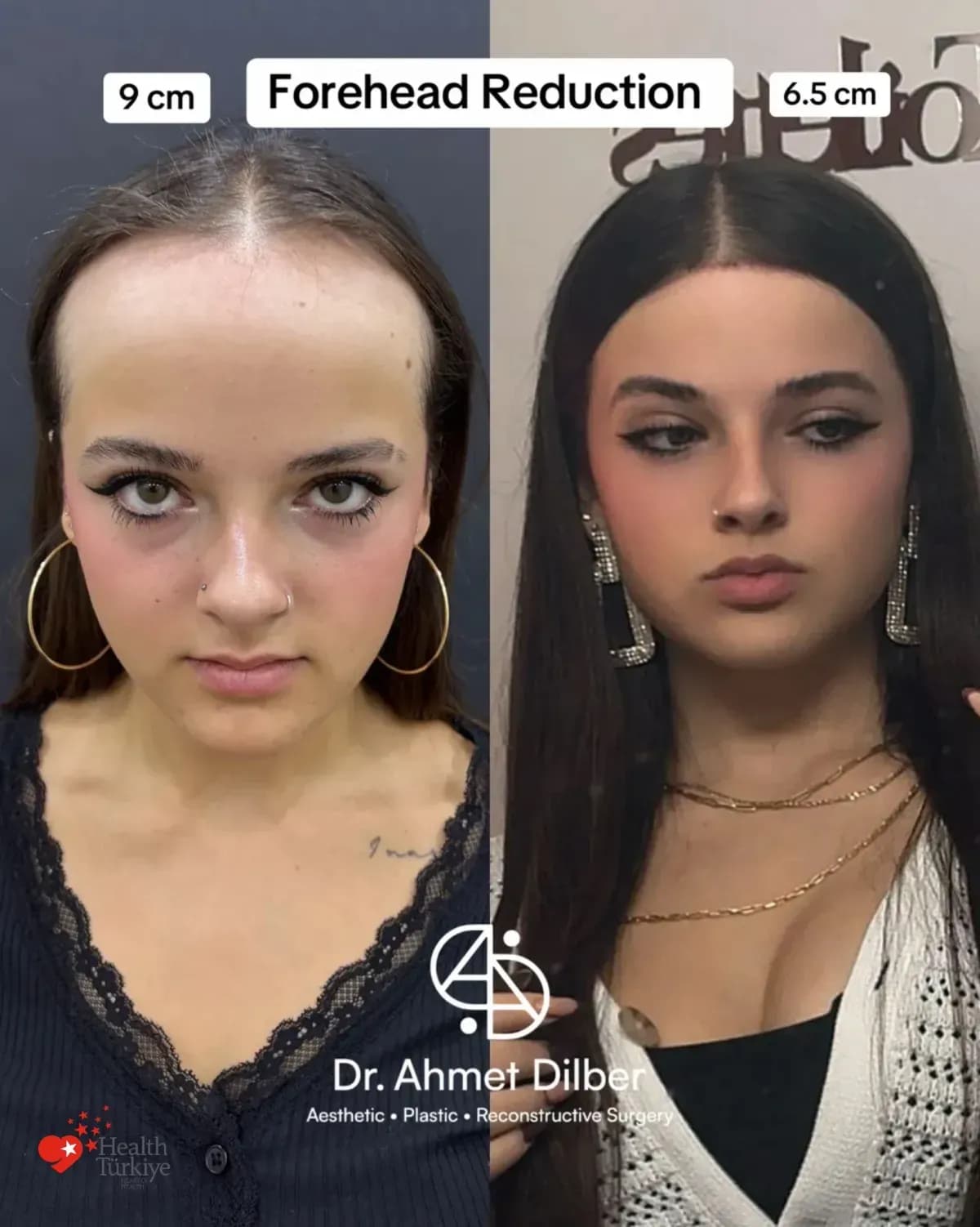
Before and after photos of Op. Dr. Ahmet Dilber's patients, from @drahmetdilber on Instagram. Results vary.
Could forehead reduction suit your hairline?
Dr. Dilber decides suitability from the photos and medical history you send, which his assistant presents to him, and confirms it when he examines you. You need to be 18 or over.
A stable hairline
Forehead reduction suits a hairline that is high by nature or has stopped moving back. If hair is still receding, the scar may show later. Tell the team about family hair loss, any hair-loss medicines and any previous transplant. Older photos help show the trend over the years. Men usually need a closer look at this; see forehead reduction for men.
Enough scalp movement
How far the hairline can come forward depends on how loose your scalp is and how tall your forehead is now. A tight scalp may allow a smaller change than you hope for. Your photos give a first view. Dr. Dilber checks scalp movement by hand at the consultation in Ataköy and makes the final plan there. The candidacy guide explains this in more detail.
Time to recover
Plan to be in Istanbul from the day before surgery until day 4. That covers the consultation, one night in hospital, and plaster removal and the check on day 4, after which you can fly home. Most people return to work after 5 days unless the job is physically demanding, and you need to wait 6 weeks before strenuous exercise. Follow-up photos continue on WhatsApp for a year.
What happens before and during your stay in Istanbul?
Before you travel: photo review
Send photos of your forehead from the front, left and right on WhatsApp, with your hair pulled back, plus your medical history. Dr. Dilber's assistant presents them to him, who decides whether you are a candidate. A video consultation with him and his assistant can be arranged if you want one. A hotel and transfer package is available on request.
The day before: consultation in Ataköy
Arrive in Istanbul the day before surgery. Dr. Dilber examines you in person at his practice in Ataköy, Bakırköy, goes through the risks with you, obtains your consent and marks the agreed hairline. Health tests and the anaesthetic assessment follow at Acıbadem Bakırköy Hospital. Stop smoking, vaping and blood thinners at least 10 days before surgery, and fast for 8 hours beforehand. Check with the doctor who prescribed a medicine before you stop it.
Surgery day: one night in hospital
The operation takes 1.5 to 2 hours under general anaesthesia at Acıbadem Bakırköy Hospital, part of the Acıbadem Healthcare Group. Dr. Dilber sees you before and after surgery. The incision is covered with plaster, which stays on until day 4. You can eat and drink 3 hours after the operation. You stay one night, are up and walking the next day and return to your hotel.
Days 2 to 4: check and flying home
You can shower from day 2 with warm or cold water, keeping hot water and hot air off the scalp. A soft head band can be worn from day 1 over the plaster. On day 4 the plaster is removed at the Ataköy practice and Dr. Dilber checks the wound. You can then fly home, with written aftercare instructions and an operation summary in English and Turkish. Keep protecting the forehead from knocks.
After you return home: follow-up for a year
You send photos of the incision on WhatsApp at 1, 3, 6 and 12 months, and Dr. Dilber and his assistants review your healing and adjust creams or medication if needed. If you notice redness, discharge, an opening wound or increasing pain, send photos straight away; he advises on treatment. Read about aftercare after you fly home.
Your stay in Istanbul
You see Dr. Dilber at his practice in Ataköy, have surgery at Acıbadem Bakırköy Hospital and can stay at a nearby hotel.
The practice in Ataköy
Your consultation, dressing checks and follow-up visits take place at Dr. Dilber's practice in Ataköy, Bakırköy.

Reception 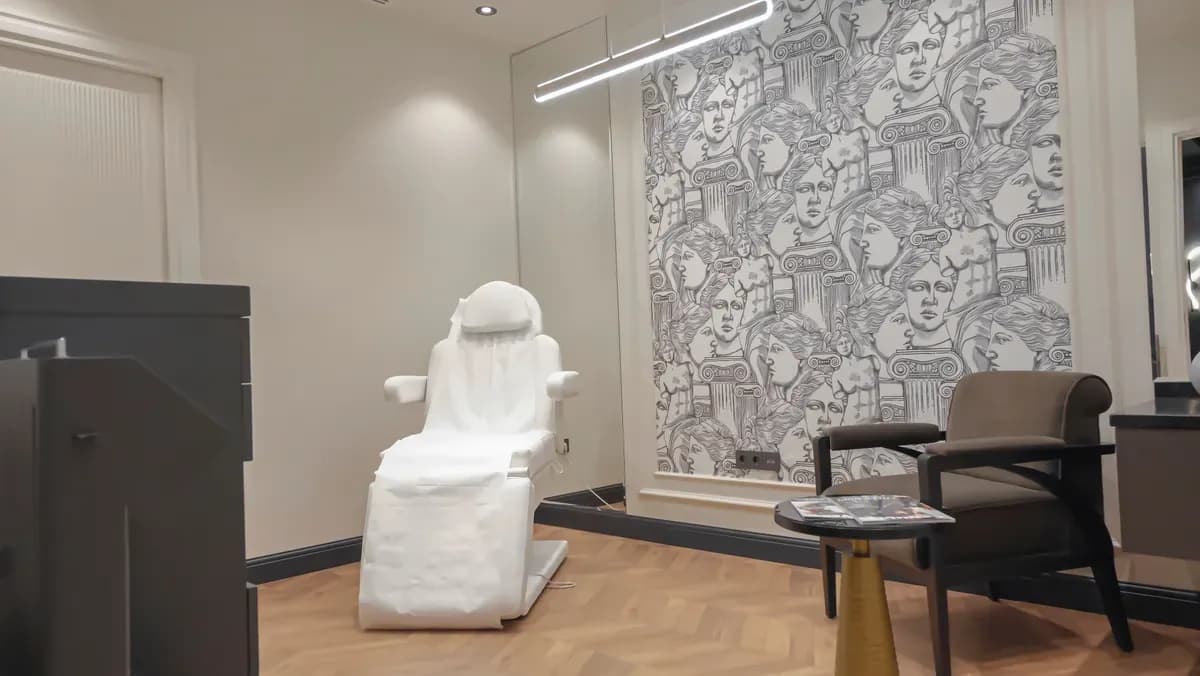
Examination room 
Consultation office 
Waiting area
Acıbadem Bakırköy Hospital
Surgery and your night in hospital take place here, with nurses on the ward and Dr. Dilber seeing you before and after the operation.

Acıbadem Bakırköy Hospital 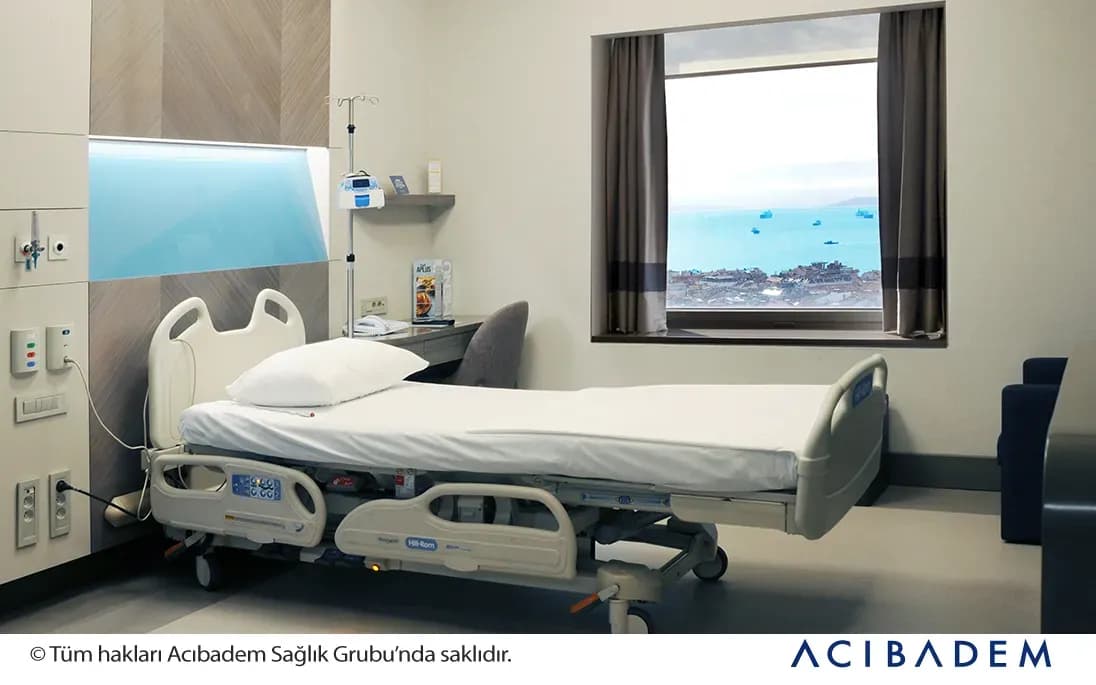
Patient room 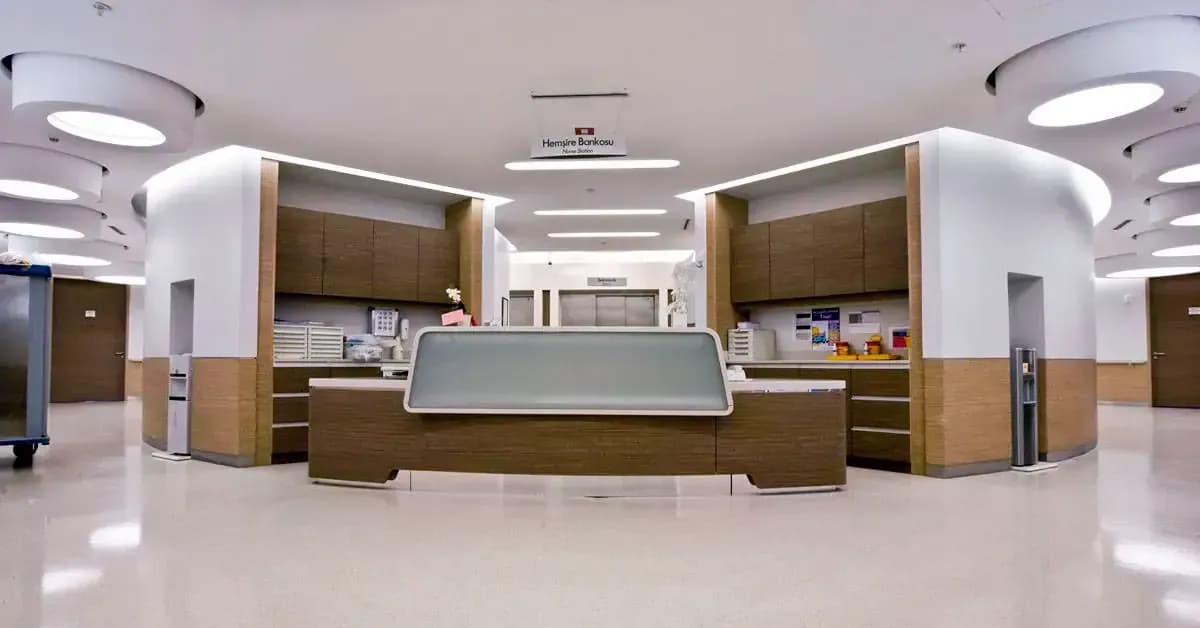
Hospital lobby 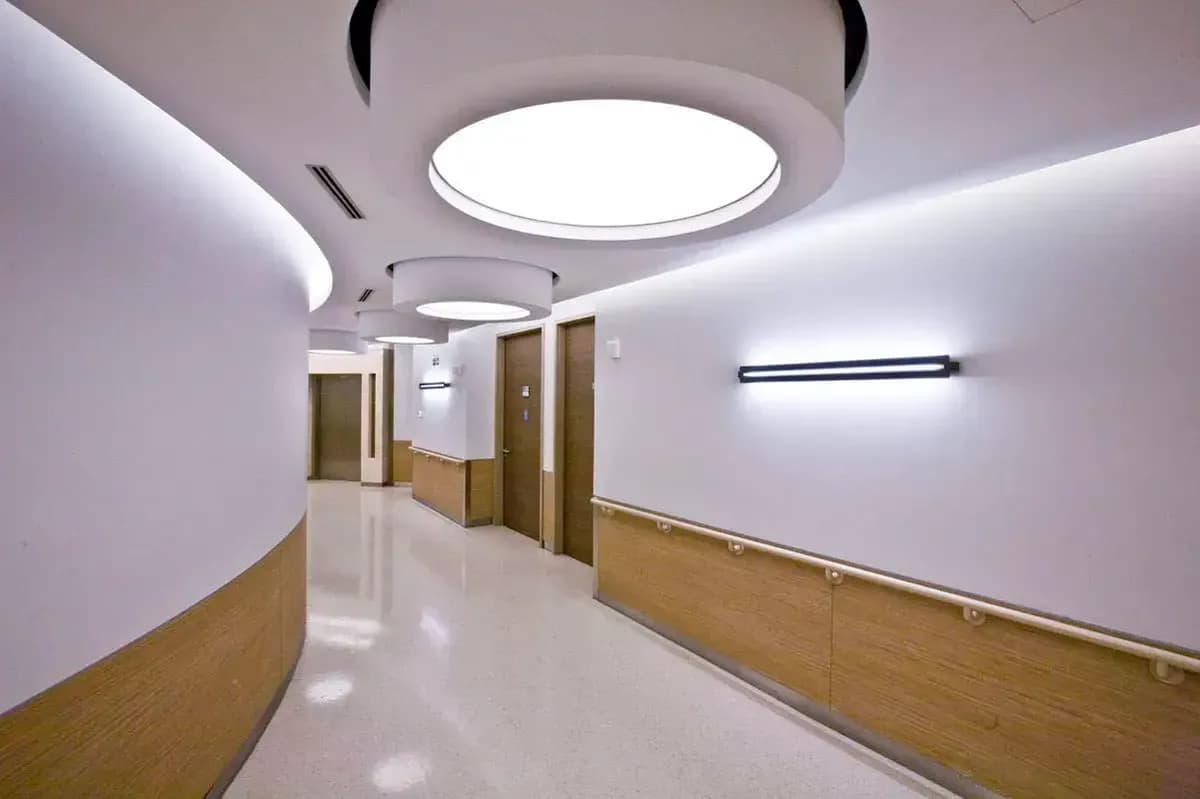
Hospital ward
Hyatt Regency Istanbul Ataköy
A hotel and transfer package is available on request, close to the practice.

Hyatt Regency Istanbul Ataköy 
Hotel room 
Hotel and sea view
What patients say
Scores from independent review platforms, covering all of Dr. Dilber's procedures, as of November 2026, and short excerpts from patient reviews.

4.9/ 5 · 166 reviews
Read reviews on RealSelf →
4.7/ 5 · 201 reviews
Read reviews on Google →
4.6/ 5 · 29 reviews
Read reviews on Trustpilot →

“People don't even notice the scar, and I'm only four months post-op!”
yasmine SM, France · Forehead reduction · December 2025
Read the full review on Trustpilot →“Something that was a big insecurity is no longer an insecurity…”
Jocelyn Lara, USA · Forehead reduction · October 2025
Read the full review on Trustpilot →“…he listened to my wishes very carefully…”
Adelina, USA · Forehead reduction · December 2025
Read the full review on Trustpilot →
How long is recovery, and what are the risks?
You are up and walking the day after surgery and back at your hotel after one night in hospital. The plaster comes off on day 4 at the Ataköy practice, and you can fly home after that check. Expect tightness and mild pain, eased by prescribed medication; swelling settles in 4 to 5 days and numbness lasts a few months. Most people return to work after 5 days unless the job is physically demanding. Avoid strenuous exercise and smoking for 6 weeks, and protect the scar with SPF 50+ while it matures over about a year. The recovery guide and the scar page give more detail.
Any cosmetic surgery carries risks. For forehead reduction they include bleeding, infection, numbness or altered sensation behind the hairline, a visible or widened scar, hair loss along the incision, an uneven hairline and the need for revision surgery. Dr. Dilber goes through each one with you in person the day before surgery, before you agree to it. Sending your follow-up photos helps spot problems early.
Recovery milestones after forehead reduction
Up and walking; leave hospital
When: Day 1, after one night
Shower, warm or cold water
When: From day 2
Plaster removed, wound checked
When: Day 4, at the Ataköy practice
Fly home
When: Day 4, after the check
Back to work; sexual activity
When: Work after 5 days, sex after 1 week; heavy jobs later
Strenuous exercise
When: After 6 weeks
Frequently asked questions
The scar sits along the hairline. The sutures dissolve within about 6 months, and hair can grow through the incision line and hide it. How fine it becomes depends on your skin, closure tension and your aftercare: use the antibiotic cream and scar gel Dr. Dilber prescribes, SPF 50+ or a hat, and avoid knocks. The scar matures over about one year. He reviews it at each photo check, and you can ask to see healed scar photos.
It depends on how loose your scalp is and how tall your forehead is now, so Dr. Dilber gives you a figure only after examining you. Your planned change is marked and agreed at the consultation. Send photos with your hair pulled back so your current forehead height is clear.
They are different operations; Dr. Dilber performs forehead reduction, not hair transplants. It lowers the whole hairline in one operation: the result is immediate, hair length does not matter and no bone is touched. Some thinning along the hairline can appear around month 3 and mostly recovers by month 6. A transplant adds density over months; if you want one later, a hair-transplant clinic can do it about one year after forehead reduction. The full comparison sets out the differences.
Tell the team before your photo review and send the date of the transplant, the number of grafts if you know it, and recent photos, including the donor area. Dr. Dilber checks how the planned incision relates to existing grafts and whether enough time has passed. Some thinning along the hairline can appear around month 3 after surgery and mostly recovers by month 6. Forehead reduction with or after a hair transplant covers timing and planning.
You are asleep under general anaesthesia during the operation. Afterwards expect tightness and mild pain, managed with medication Dr. Dilber prescribes. Pressure or a headache in the forehead is usual for the first weeks. Swelling usually settles in 4 to 5 days, and numbness behind the hairline can last a few months. You are up and walking the day after surgery. If pain increases after you fly home, send photos on WhatsApp so he can review them.
Yes, if Dr. Dilber finds you suitable. Forehead reduction can be combined with rhinoplasty, eyelid surgery (blepharoplasty) or a brow lift, all under general anaesthesia. Combined surgery can take 5 to 6 hours. With open rhinoplasty, Dr. Dilber removes the splints and nasal cast at your day 7 check, and you go home on day 8. The details of a combined plan, including the quotation, are given after consultation. See combined procedures.
Confirm who operates, where the consultation and surgery take place and what happens if a problem appears after you fly home. Ask for these answers in writing. Dr. Dilber examines you in person in Ataköy the day before surgery, surgery is at Acıbadem Bakırköy Hospital and he reviews your follow-up photos for up to a year. The NHS publishes advice on surgery abroad; see also travelling from the UK.
There is no price list. After Dr. Dilber reviews your photos and decides you are suitable, you receive a written quotation; if surgery would not suit you, you are told before any quotation. It includes surgery, anaesthesia, pre-operative tests, one night in hospital and follow-up checks. Medication, hotel and transfers are not included; a hotel and transfer package is available on request. The cost page explains each factor.
Related pages
- Forehead Reduction Cost in Turkey
- Before & After (Men & Women)
- Forehead Reduction Scar
- Recovery Day by Day
- Forehead Reduction for Men
- Forehead Reduction vs Hair Transplant
- Forehead Reduction After Hair Transplant
- Patients from the UK (+ Ireland)
- Am I a Candidate for Forehead Reduction?
- Forehead Reduction FAQ
- Hairline Lowering for Women
- Forehead Reduction vs / with Brow Lift
- Non-Surgical Options for a Large Forehead
- Big / High Forehead Surgery
- Forehead Reduction in Turkey: Reviews
- Patients from the USA
- Forehead Reduction + Rhinoplasty or Eyelids
Explore the practice
 About Dr. DilberTraining, hospital and how he works with patients from abroad.Read his profile →
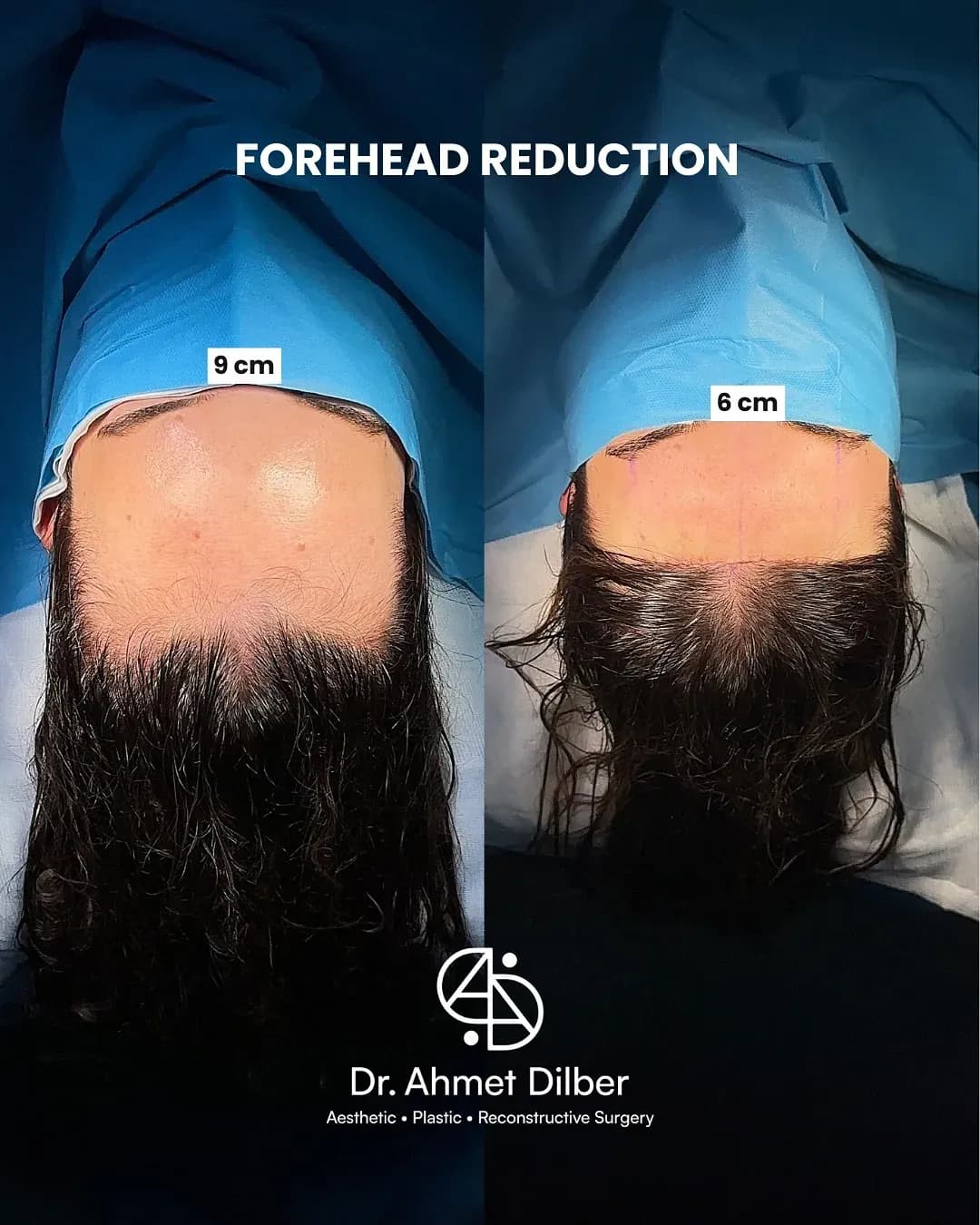 Before and after resultsBefore and after photos of Dr. Dilber's patients. Results vary.See the gallery →
 Patient guide (PDF)The guide we send every patient: timeline, medication, aftercare.Download the guide →
Send three photos. Find out if you are a candidate.
Photograph your forehead from the front, left and right with your hair pulled back. Dr. Dilber's assistant presents them to him, and the team replies on WhatsApp with his view and the next steps.
