

Forehead Reduction vs Hair Transplant: Which Suits Your Hairline?
Forehead reduction lowers the whole hairline in one operation: forehead skin is removed and the hair-bearing scalp is moved forward, so the new position is set on the day. A hair transplant moves follicles into thin areas, and the hair grows in over 10 to 18 months. Dr. Dilber performs forehead reduction; a transplant, if wanted, is done at a hair-transplant clinic.
Send your photos on WhatsAppRead about forehead reductionMedically reviewed by Op. Dr. Ahmet Dilber, Plastic, Reconstructive and Aesthetic Surgeon · Last reviewed November 2026



Ratings as of November 2026
Acıbadem Bakırköy
where Dr. Dilber operates, with one night of hospital care
1 year
of follow-up after surgery, in person or on WhatsApp
Licensed
for international health tourism by the Turkish Ministry of Health
What is the difference between moving the hairline and placing grafts?
Forehead reduction, also called hairline lowering, shortens the distance between the hairline and the root of the nose. A strip of forehead skin in front of the hairline is removed and the hair-bearing scalp is brought forward. Op. Dr. Ahmet Dilber performs it under general anaesthesia in 1.5 to 2 hours, with one night in hospital. It moves hair you already have, and the bone is never touched.
A hair transplant moves individual follicles from the back of the head, the donor area, into a thinning or bald area. According to the NHS, it is usually done in one day under local anaesthetic with sedation, either by removing a thin strip of scalp (FUT) or by taking grafts one by one (FUE).
Dr. Dilber does not perform hair transplants. Transplant facts on this page come from the NHS and the International Society of Hair Restoration Surgery (ISHRS). If a transplant suits your goal better, his assistant tells you after the photo review. Read more about Dr. Dilber.



Forehead reduction results
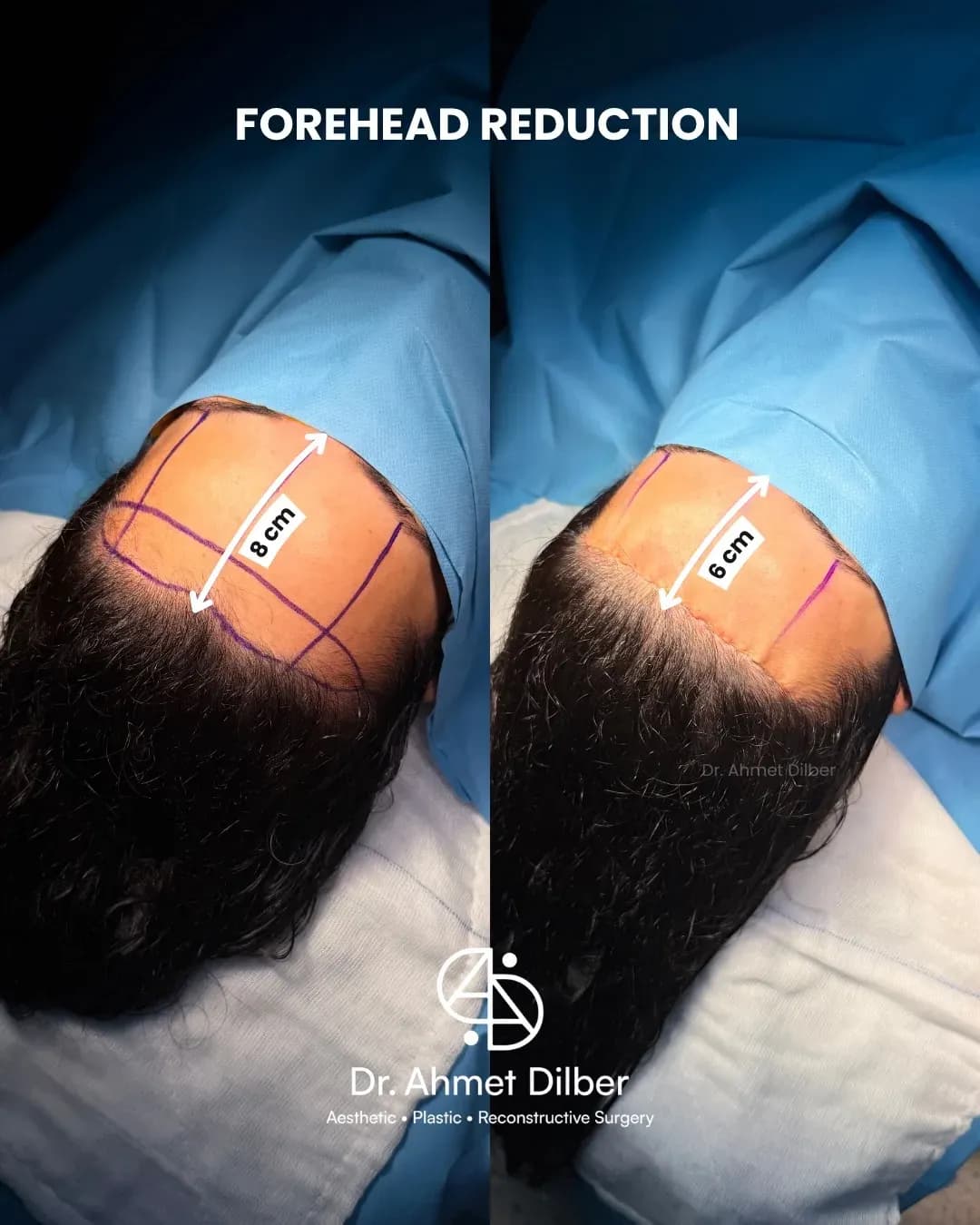
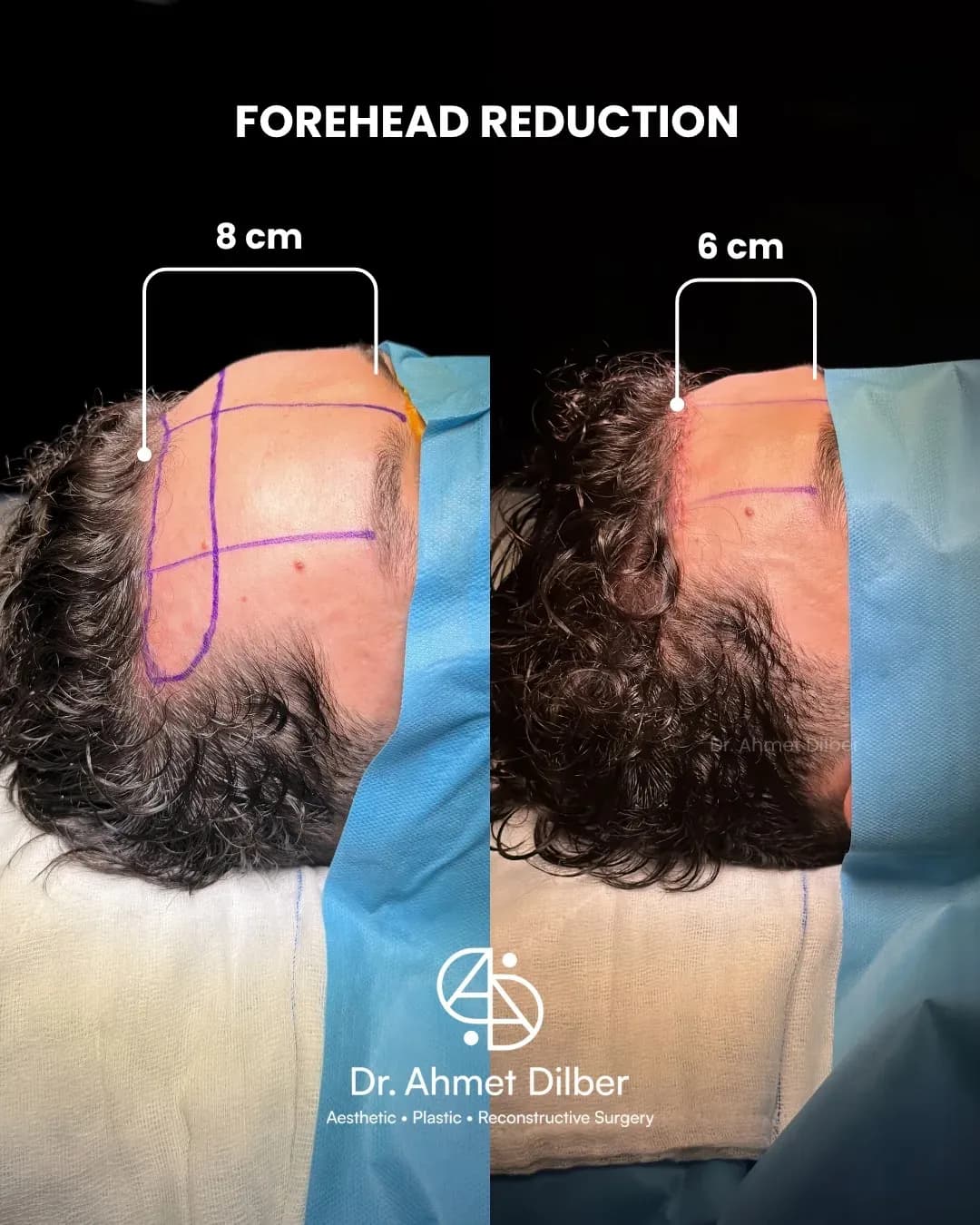
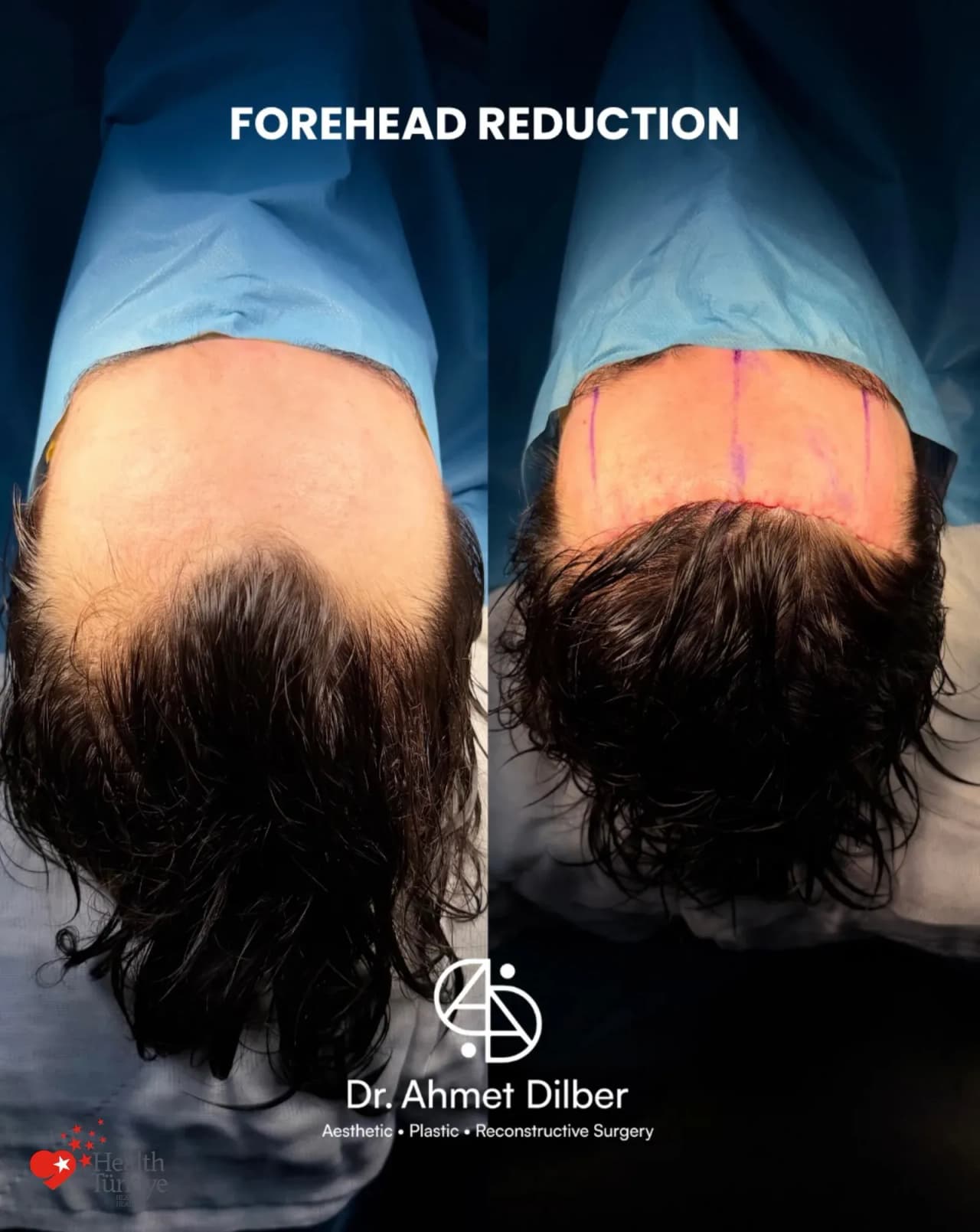
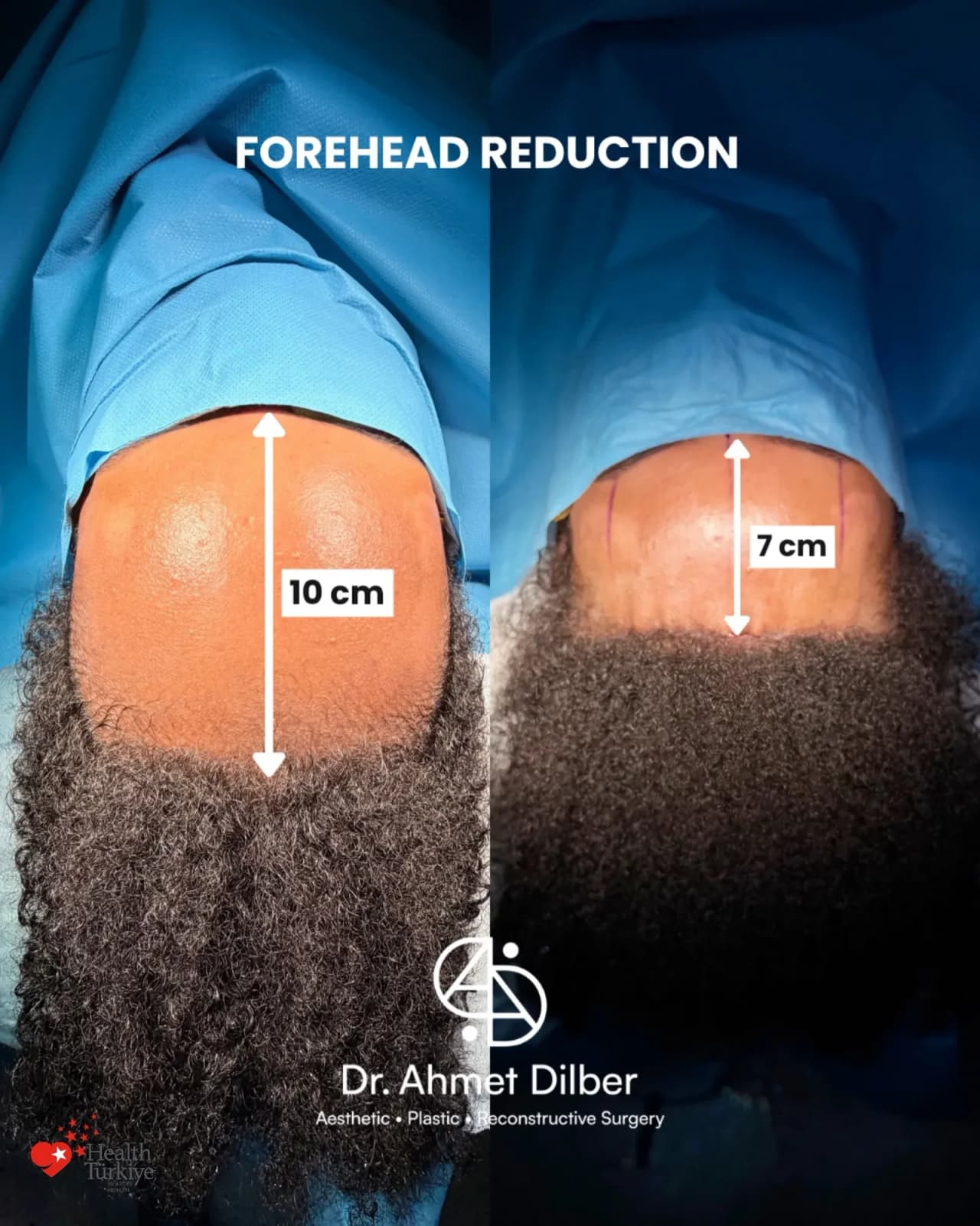
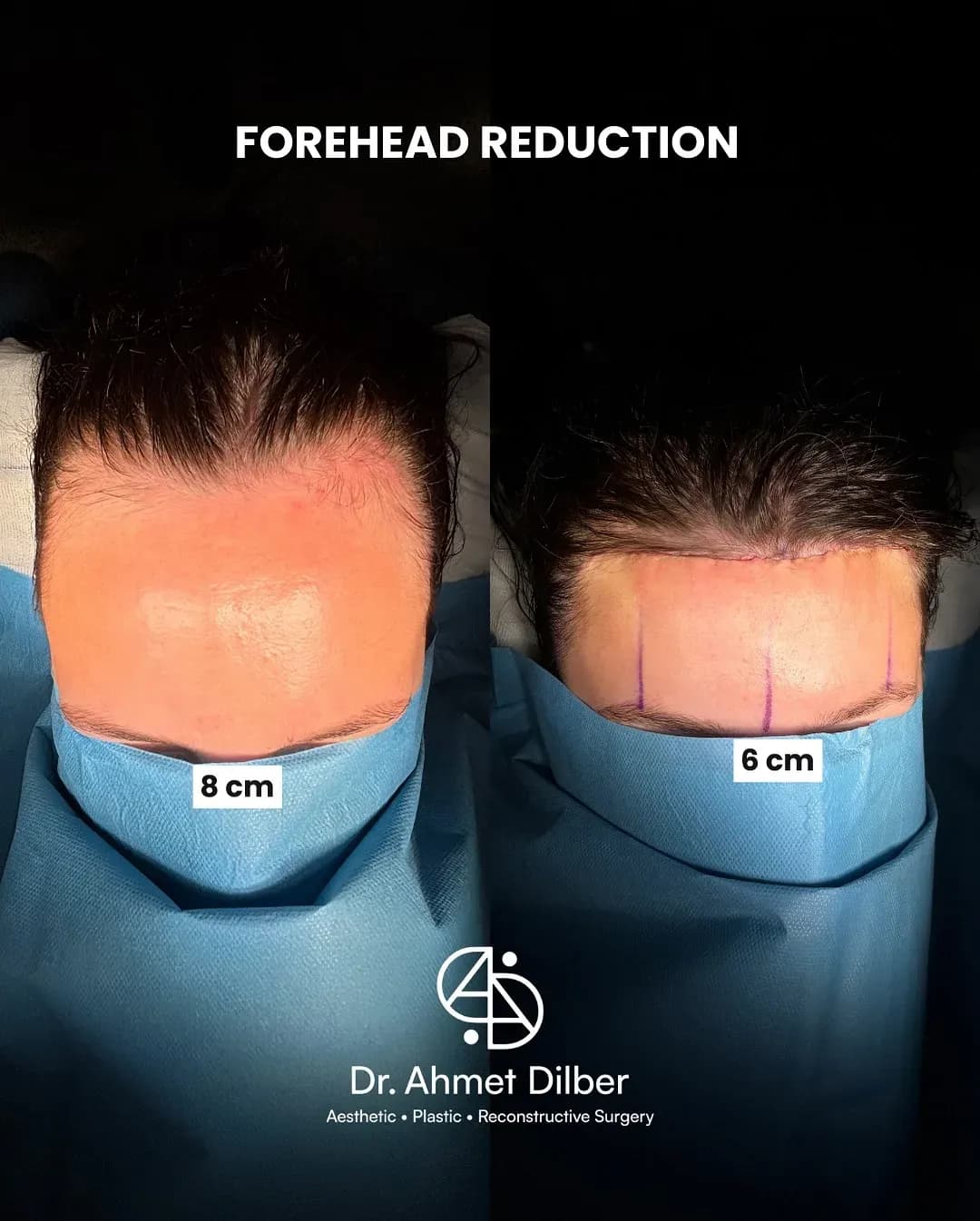
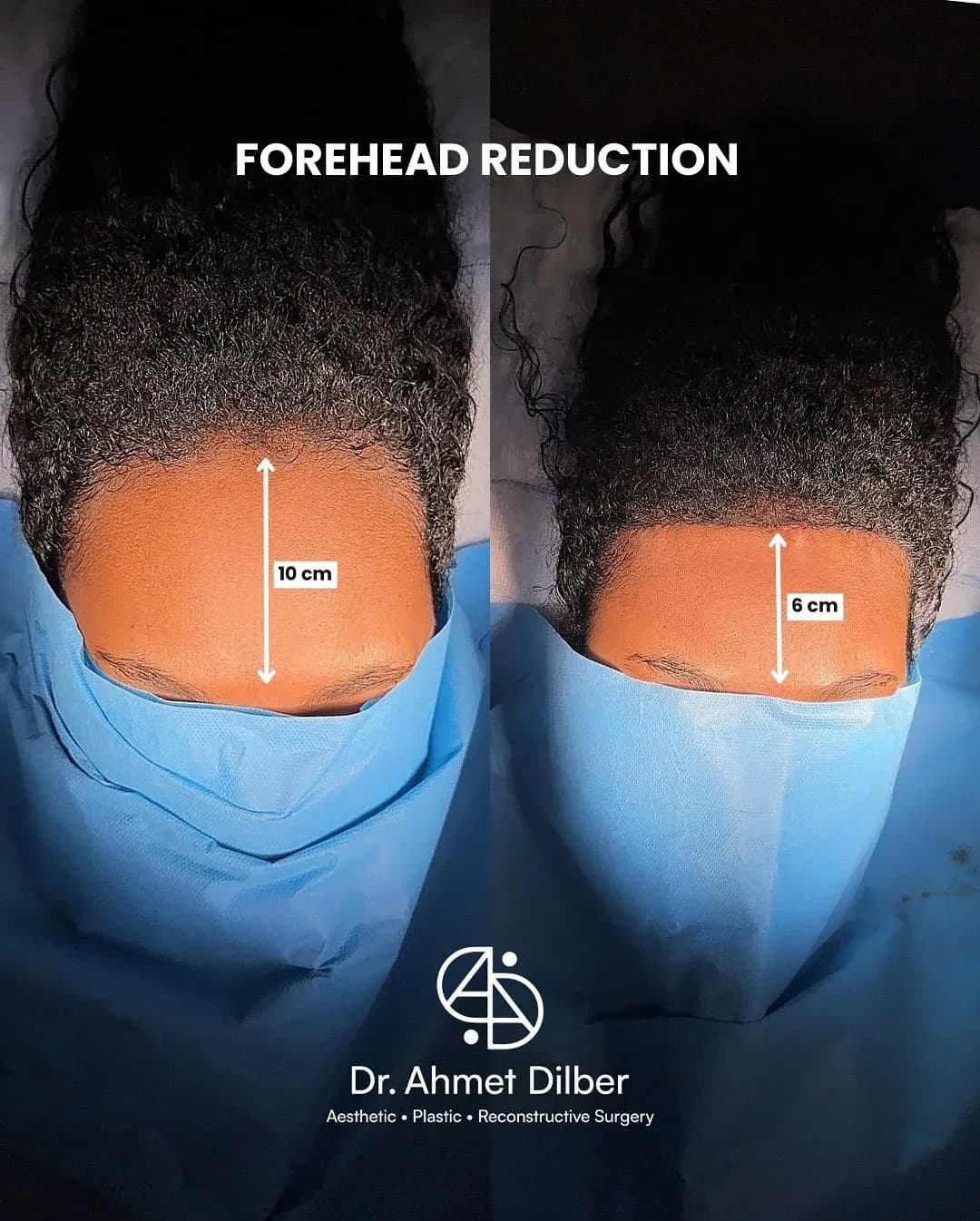
Before and after photos of Op. Dr. Ahmet Dilber's patients, from @drahmetdilber on Instagram. Results vary.
How do forehead reduction and a hair transplant compare side by side?
The two operations change different things. Forehead reduction changes the height of the forehead in one step: when you wake up, the hairline is in its new position, although swelling and the scar take months to settle. Hair length does not matter, so it works with short hair. A transplant changes density and shape. NHS guidance says transplanted hairs often fall out after a few weeks and the full result is expected at 10 to 18 months.
The scars sit in different places. Forehead reduction leaves one line along the hairline; the sutures dissolve within about 6 months, and hair can grow through the incision line and hide it. A transplant leaves marks in the donor area: a linear scar after FUT, or, as the ISHRS notes, the many small round scars that FUE almost always leaves. Neither operation is scar-free; the scar page covers healing.
No head-to-head trial shows that one method gives better results, so the choice rests on your hairline, not on a general ranking.
Forehead reduction and hair transplant side by side
What it changes
Forehead reduction: Forehead height; the whole hairline moves forward
Hair transplant: Density and shape where grafts are placedHow it is done
Forehead reduction: Skin strip removed, scalp advanced, sutures
Hair transplant: Follicles moved from donor area into small cutsAnaesthesia and stay
Forehead reduction: General; 1.5 to 2 hours; one night in hospital
Hair transplant: Usually local with sedation; one day, no overnight stay (NHS)When the result shows
Forehead reduction: Hairline in its new position on the day
Hair transplant: Growth from about 4 months; full at 10 to 18 months (NHS)Scar
Forehead reduction: One line along the hairline
Hair transplant: Donor scar: one line (FUT) or small dots (FUE)Back to work
Forehead reduction: After 5 days, later for physically demanding jobs
Hair transplant: Often 1 to 2 weeks (NHS)
What does Dr. Dilber look at when you ask about forehead reduction?
Start with the change you want. If the whole forehead looks tall and your hair is thick up to the hairline, forehead reduction addresses that in one operation. If the concern is recession at the temples, a thin hairline or thinning further back, a transplant adds hair where it is missing. Forehead reduction cannot add density, and a transplant cannot remove forehead skin.
Dr. Dilber decides whether forehead reduction suits you from your photos and medical history, which his assistant presents to him, and confirms it when he examines you the day before surgery. Your hair-loss history matters most: if hair is still receding, the scar can show later. The NHS notes that hair may keep thinning around a transplant too. See forehead reduction for men and the candidacy guide. The table lists what he looks at.
What Dr. Dilber looks at
Forehead height
Why it matters: How far the hairline needs to come forward
What to send: Front and side photos, hair pulled backHair density at the hairline
Why it matters: Forehead reduction moves existing hair; it does not add any
What to send: Close-up of the hairlineTemples
Why it matters: Temple recession is not changed by lowering the central hairline
What to send: Close-up of each templeHair-loss history
Why it matters: A receding hairline can expose the scar later
What to send: Older dated photos; family historyScalp looseness
Why it matters: Sets how far the scalp can move
What to send: Photos; checked by hand in personPrevious transplant
Why it matters: Planning must account for grafts near the incision
What to send: Transplant date, method, graft count
What are the advantages of each option?
Dr. Dilber gives his view after reviewing your photos and examining you in Ataköy. These points help you compare.
Forehead reduction
- Immediate result: the new hairline is set on the day
- Hair length does not matter; works with short hair
- The bone is never touched
- Thinning possible around month 3; mostly recovers by month 6
Hair transplant
- Adds hair to thin temples or a thin hairline
- Can add density further back
- Growth over 10 to 18 months (NHS)
- Done at a hair-transplant clinic, not by Dr. Dilber
If you want both
- Forehead reduction first, with Dr. Dilber
- Transplant about one year later, at a hair-transplant clinic
- Scar matured and hairline settled by then
Your stay in Istanbul
You see Dr. Dilber at his practice in Ataköy, have surgery at Acıbadem Bakırköy Hospital and can stay at a nearby hotel.

The practice in Ataköy 
Acıbadem Bakırköy Hospital 
Patient room 
Hotel room, on request
What are the risks of each procedure, and what happens after you fly home?
Any cosmetic surgery carries risks. For forehead reduction they include bleeding, infection, numbness or altered sensation behind the hairline, a visible or widened scar, hair loss along the incision, an uneven hairline and the need for revision surgery. The NHS lists bleeding, infection, an allergic reaction to the anaesthetic, grafts that do not take and a noticeable scar as risks of a hair transplant. Dr. Dilber goes through the risks of the plan proposed to you at the consultation, before you agree to surgery.
Your photos are reviewed on WhatsApp first. Dr. Dilber examines you in person at his practice in Ataköy, Istanbul, the day before surgery, followed by health tests and the anaesthetic assessment at Acıbadem Bakırköy Hospital. After forehead reduction you leave Istanbul on day 4, after the dressing check, and send photos at 1, 3, 6 and 12 months. If you notice redness, discharge or increasing pain at home, send photos straight away. Read about aftercare after you fly home.
Main risks to discuss for each option
Scar
Forehead reduction: Line along the hairline; can widen
Hair transplant (NHS, ISHRS): Donor line (FUT) or small round scars (FUE)Hair loss
Forehead reduction: Thinning possible around month 3; mostly recovers by month 6
Hair transplant (NHS, ISHRS): Transplanted hairs often shed, then regrowSensation
Forehead reduction: Numbness or altered sensation behind the hairline
Hair transplant (NHS, ISHRS): Tight, achy, swollen scalp for a few daysResult
Forehead reduction: Uneven hairline possible
Hair transplant (NHS, ISHRS): Grafts may not take; more sessions possibleFuture hair loss
Forehead reduction: Scar may show if hair recedes
Hair transplant (NHS, ISHRS): Thinning may continue around the grafts
What do patients ask when comparing the two?
Look at what bothers you most. A tall forehead with thick hair points to forehead reduction; thin temples or a thin hairline point to a transplant. Send photos from the front, left and right with your hair pulled back, plus close-ups of the temples. Dr. Dilber's assistant presents them to him, and he tells you whether forehead reduction suits you or a transplant fits better.
Yes, a transplant can place grafts below the current hairline to lower it. Enough grafts are needed for the new line to look dense, and they come from a limited donor supply, so a large lowering can use many grafts and more than one session. The result grows in over months. Forehead reduction lowers the hairline with your own scalp instead, and the result is immediate.
You can discuss your usual hairstyle and how short you wear your hair at the back, because that affects how visible donor scars are. NHS guidance describes grafts taken from the back of the head. The clinician performing the transplant decides the exact harvest area from your donor density. The ISHRS warns that poorly performed FUE can thin the donor area. Forehead reduction does not use a donor area.
Possibly. The NHS says large areas may need two or more sessions on different days, and the ISHRS notes that hair restoration can be revised over time with more surgery, including as hair loss progresses. Forehead reduction is planned as one operation, and the new hairline is in place on the day. Ask the transplant clinic how many sessions its plan is likely to need.
For FUE, the NHS describes shaving the back of the head before grafts are taken; the treating clinic can explain its own method. For forehead reduction, hair length does not matter, so it works with short or long hair. The team confirms before surgery whether any hair near the incision needs trimming, so you can plan how you wear your hair afterwards.
Only partly. It lowers the central hairline, but the temple corners keep their shape, and it does not stop genetic hair loss. If your hairline is still moving back, the scar may show later, so Dr. Dilber looks at older photos to judge the trend. Where recession is the main concern, he tells you plainly that a transplant may fit better.
Yes. Dr. Dilber does not perform hair transplants, but a hair-transplant clinic can place grafts about one year after forehead reduction, once the scar has matured and the hairline has settled. Grafts can then round off the temples or add density along the front. Forehead reduction with or after a hair transplant covers timing and the effect on existing grafts.
Explore the practice
 About Dr. DilberTraining, hospital and how he works with patients from abroad.Read his profile →
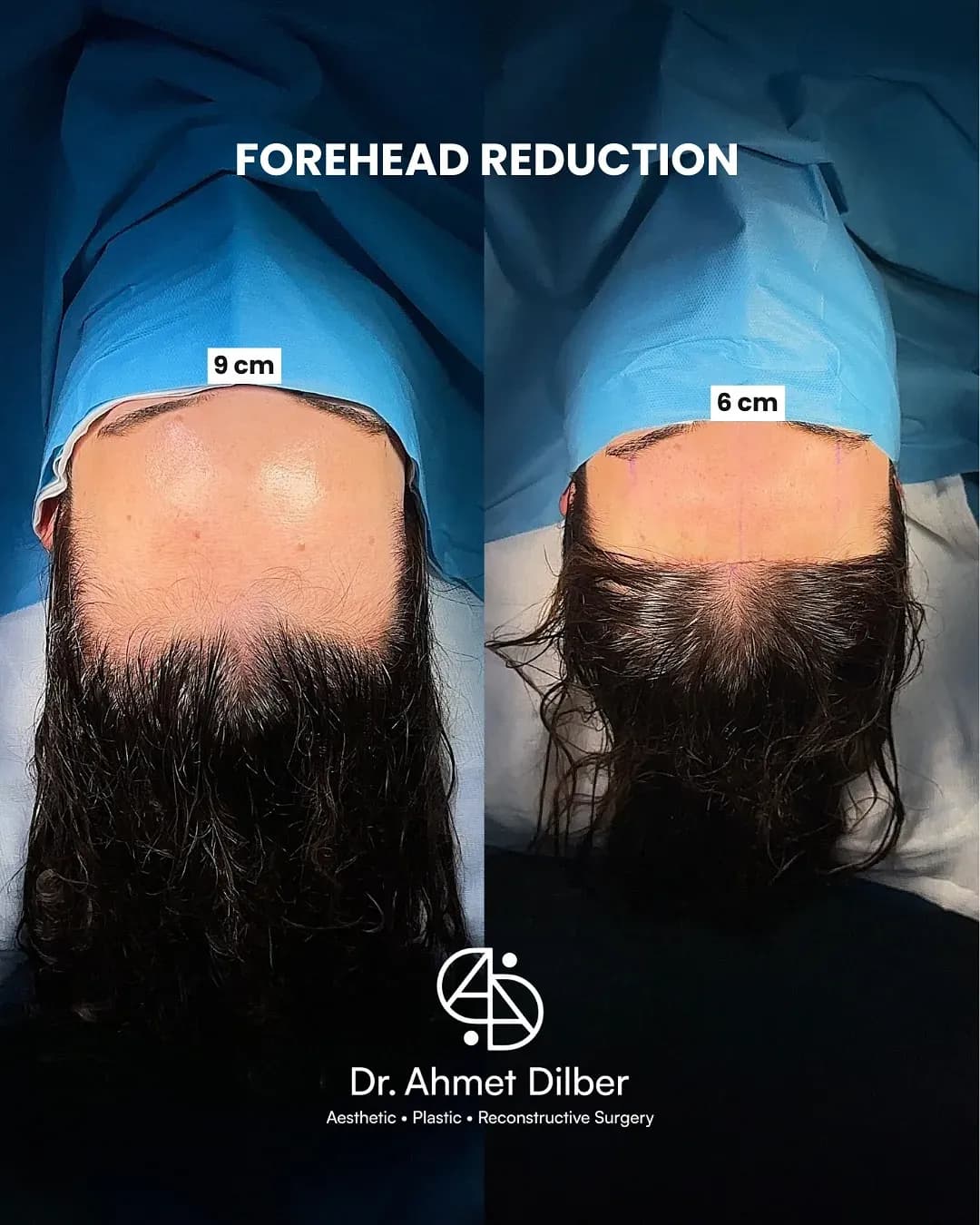 Before and after resultsBefore and after photos of Dr. Dilber's patients. Results vary.See the gallery →
 Patient guide (PDF)The guide we send every patient: timeline, medication, aftercare.Download the guide →
Send three photos. Find out which option fits.
Photograph your forehead from the front, left and right with your hair pulled back, and add a close-up of each temple. Dr. Dilber reviews them, and his assistant replies on WhatsApp with his view and the next steps.
