

Can You Reduce a Large Forehead Without Surgery?
Not in the literal sense. No cream, exercise, massage or injection moves the hairline down or reshapes forehead bone. Without surgery you can change how large the forehead looks, with a fringe, hair fibres or a hairpiece, and anti-wrinkle injections can soften forehead lines. Lowering the hairline itself takes surgery: forehead reduction, which gives an immediate result and never touches the bone.
Send your photos on WhatsAppRead about forehead reductionMedically reviewed by Op. Dr. Ahmet Dilber, Plastic, Reconstructive and Aesthetic Surgeon · Last reviewed November 2026



Ratings as of November 2026
Acıbadem Bakırköy
where Dr. Dilber operates, with one night of hospital care
1 year
of follow-up after surgery, in person or on WhatsApp
Licensed
for international health tourism by the Turkish Ministry of Health
What can a non-surgical option actually change?
A forehead looks large for one of three reasons: the hairline sits high, the hair at the front is thin or receding, or the brow bone is prominent. Non-surgical options change what people see. They cover part of the forehead, add the look of density at the front, or soften lines. None of them moves the hairline or the scalp.
Forehead reduction, also called hairline lowering, shortens the distance between the hairline and the root of the nose by moving the hair-bearing scalp forward. It is an operation. Many people try a new hairstyle first and find it is enough; choosing no treatment at all is also a reasonable decision.
Op. Dr. Ahmet Dilber is a plastic, reconstructive and aesthetic surgeon who sees patients at his practice in Ataköy, Istanbul. From your photos he can tell you whether your concern is hairline height, hair density or both. Without surgery, Dr. Dilber can advise you on injectable treatments. Read more about Dr. Dilber.



Forehead reduction results
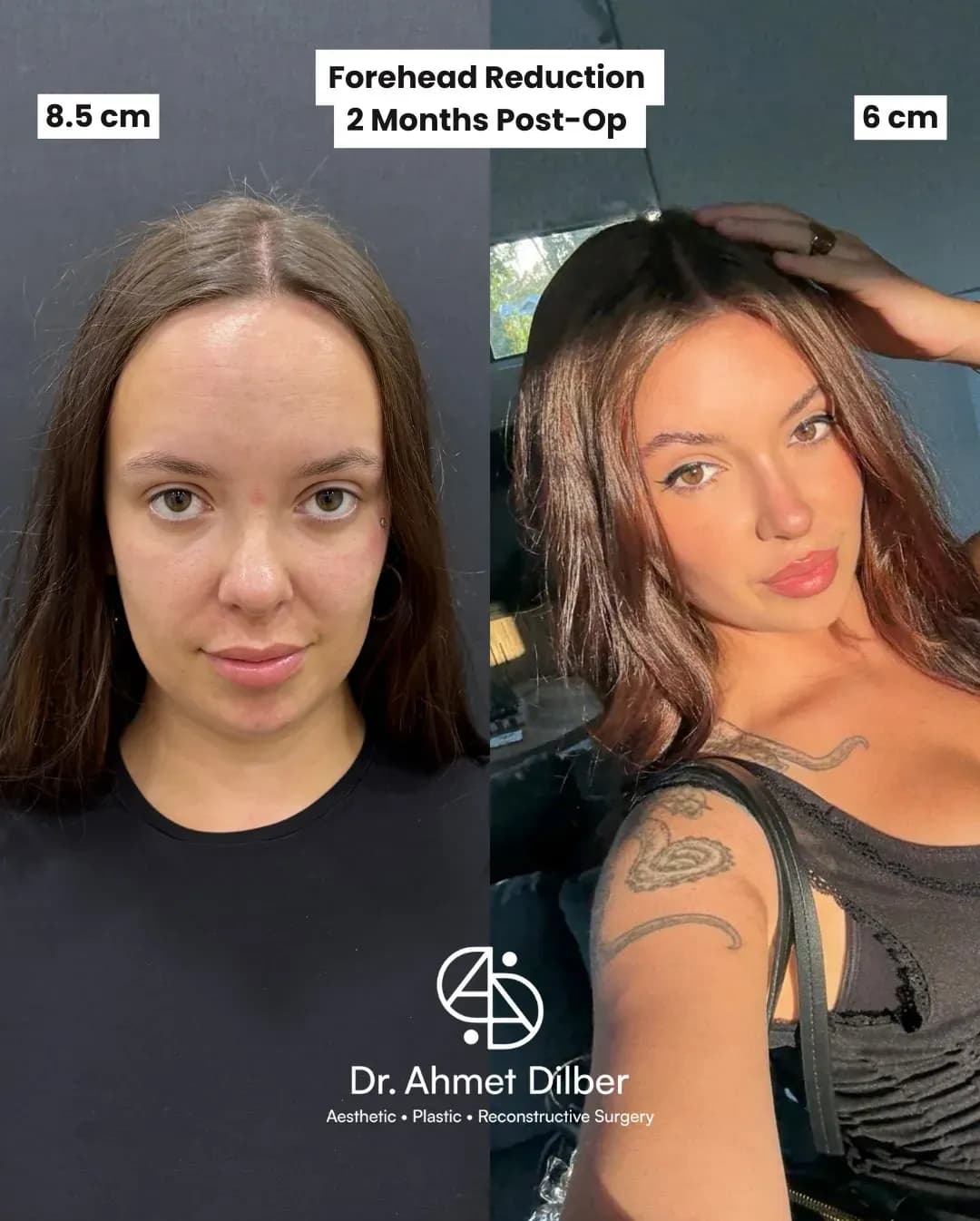
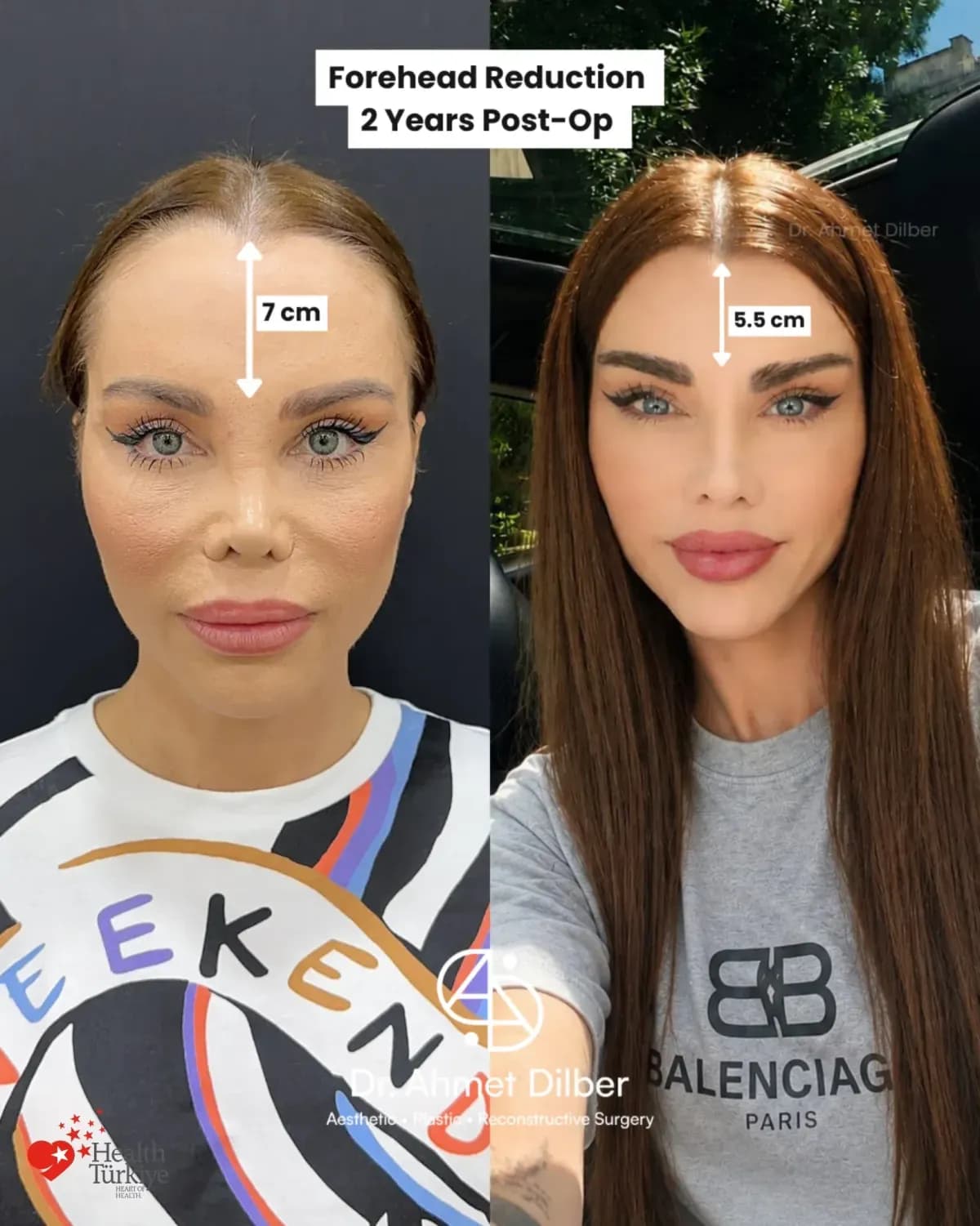
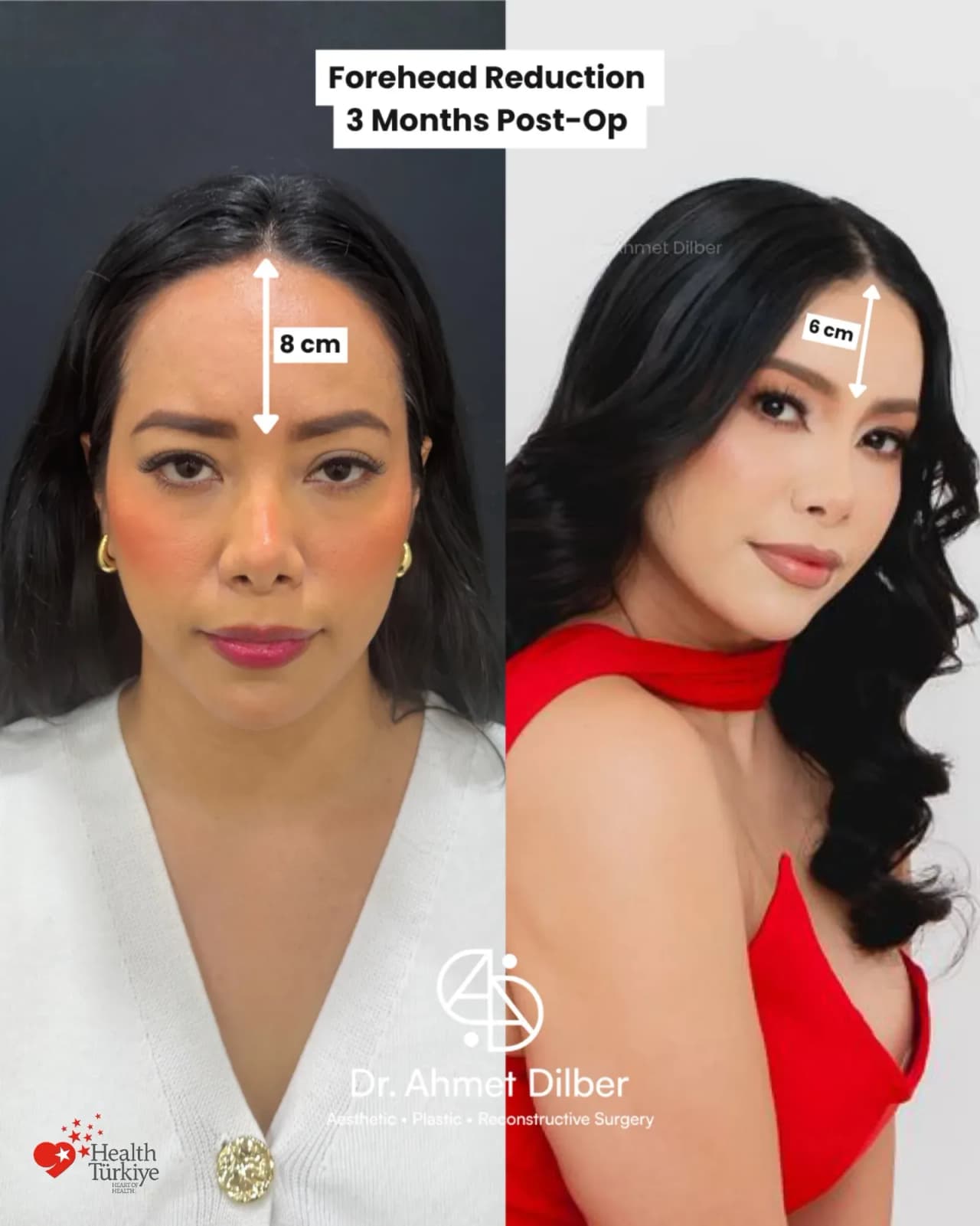
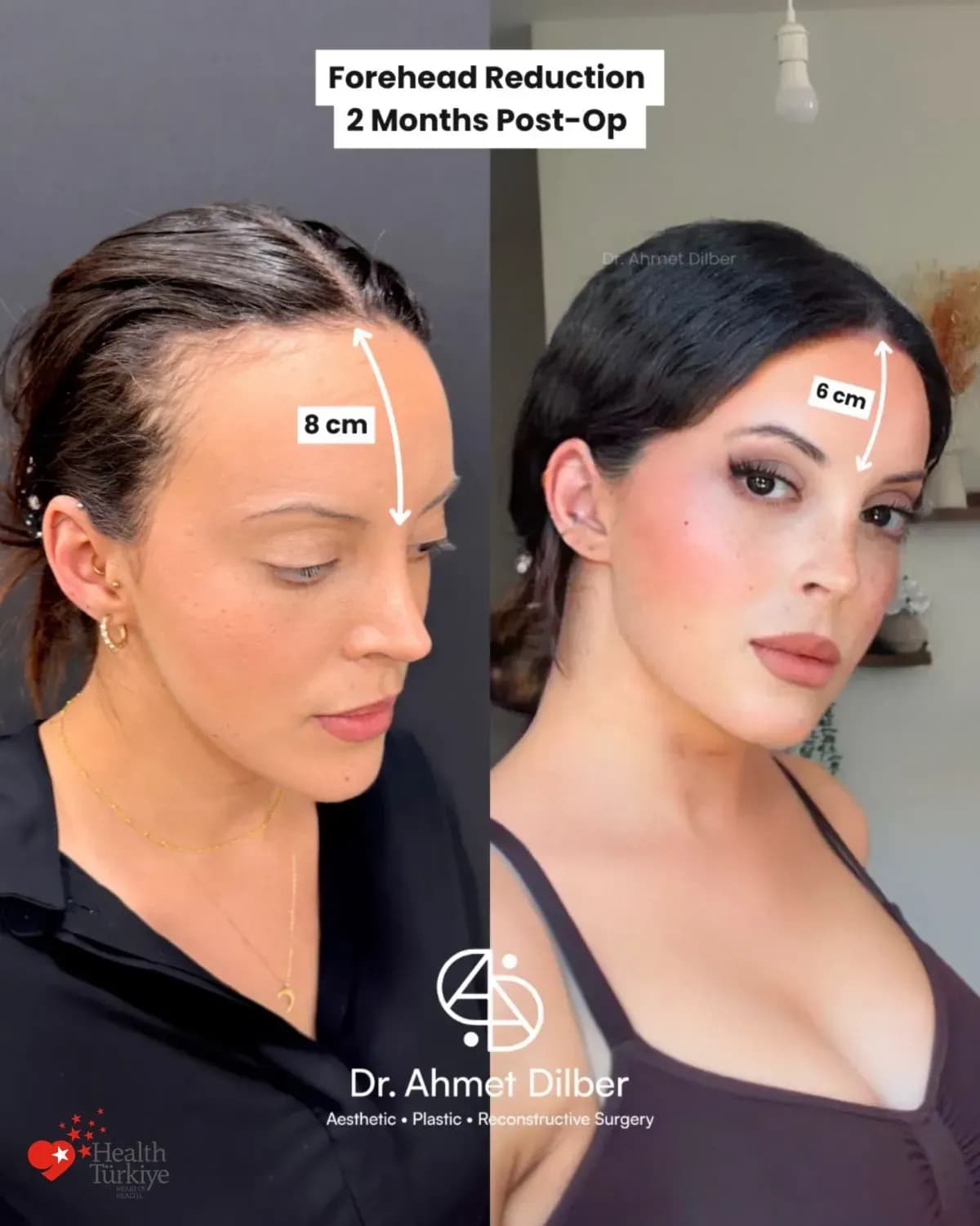
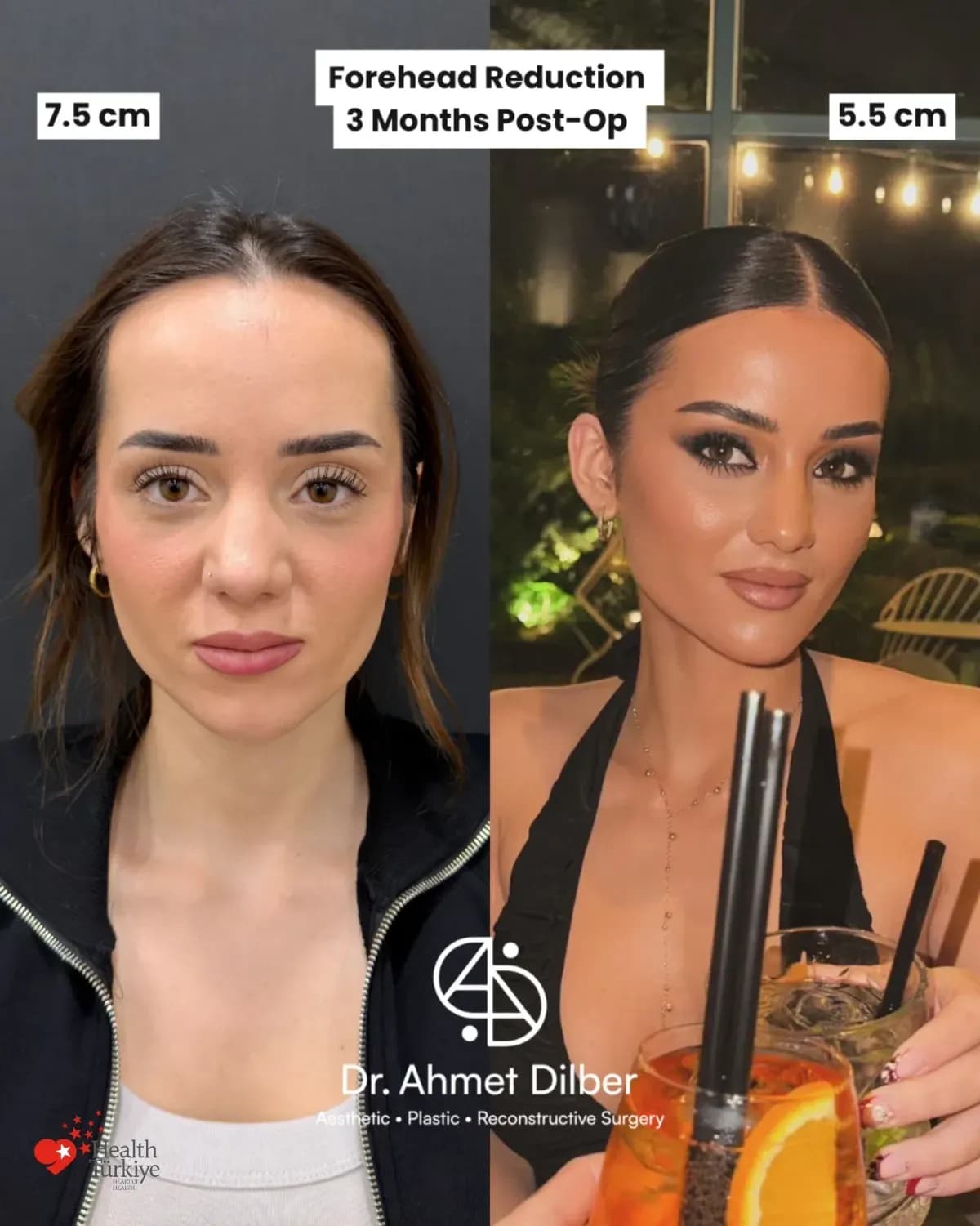
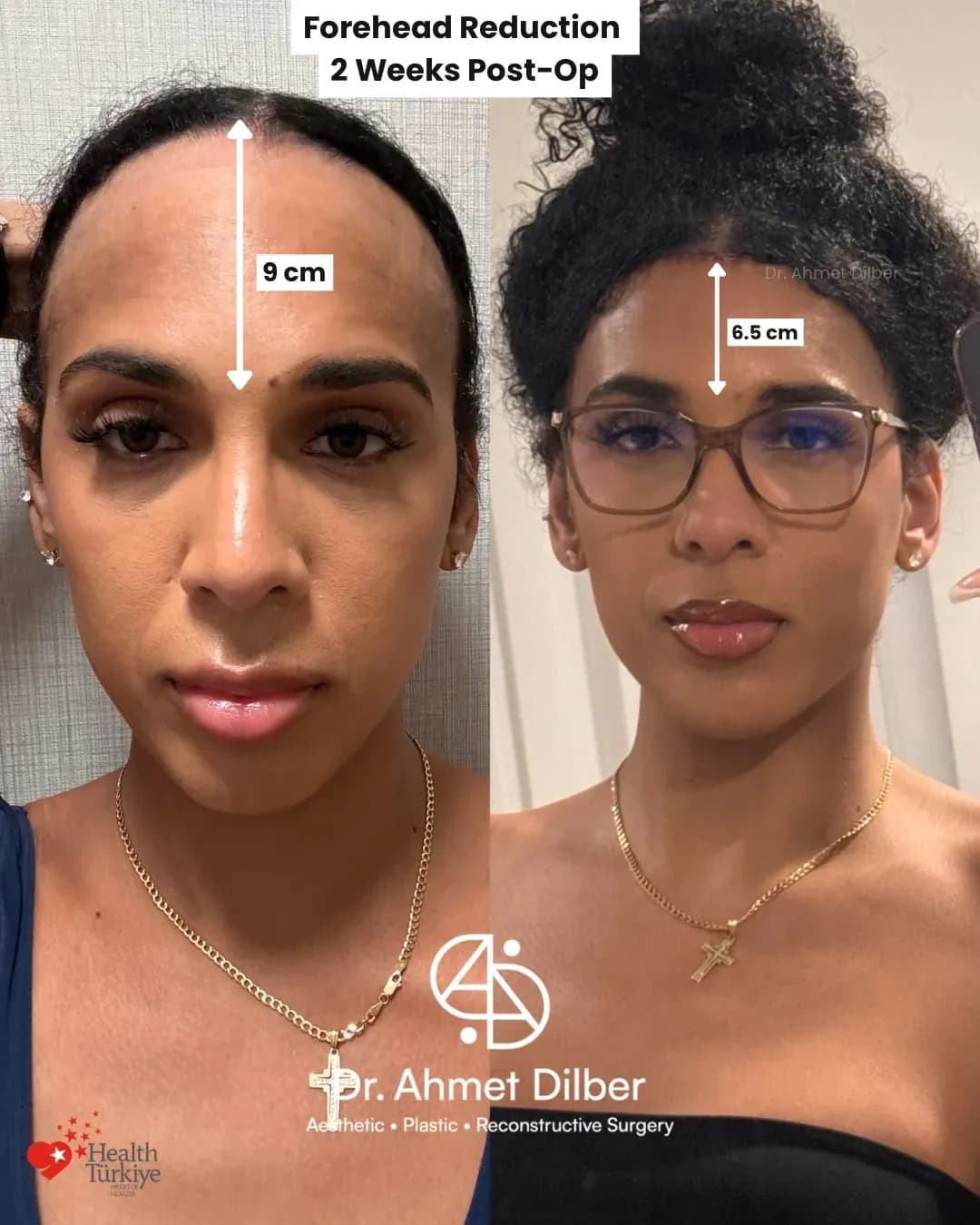
Before and after photos of Op. Dr. Ahmet Dilber's patients, from @drahmetdilber on Instagram. Results vary.
Which non-surgical options are there, and what does each do?
These are the options people ask about most, from least to most commitment. None of them changes where the hairline sits.
Hairstyle or fringe
A fringe or side-swept style covers part of the forehead without any procedure. It needs daily styling, and wind, sport or a tied-back style for work can expose the forehead again. It is the simplest way to test how much a lower-looking hairline matters to you.
Hair fibres and concealers
Coloured fibres or powders cling to existing hair and make a thin front hairline look denser. They wash out, need reapplying and need some hair to cling to. They do not create a new, lower hairline.
Hairpiece or hair system
A partial hairpiece attached at the front can create a lower-looking front edge. It needs fitting, regular maintenance and replacement over time. Some people find the attachment uncomfortable in heat or during sport.
Botox
Botox injections into the muscles around the brows can lift the brows slightly and soften forehead lines; ask Dr. Dilber whether it suits you. They do not change where the hairline sits or its distance from the nose root. The effect wears off. Before forehead reduction, avoid Botox in the 6 weeks before surgery; it is possible again 1 month after. See forehead reduction vs brow lift.
Fillers
Fillers add volume where it is lacking. They do not make a forehead smaller or move the hairline. The practice offers them, and Dr. Dilber tells you after reviewing your photos whether they suit your concern.
Your stay in Istanbul
You see Dr. Dilber at his practice in Ataköy, have surgery at Acıbadem Bakırköy Hospital and can stay at a nearby hotel.
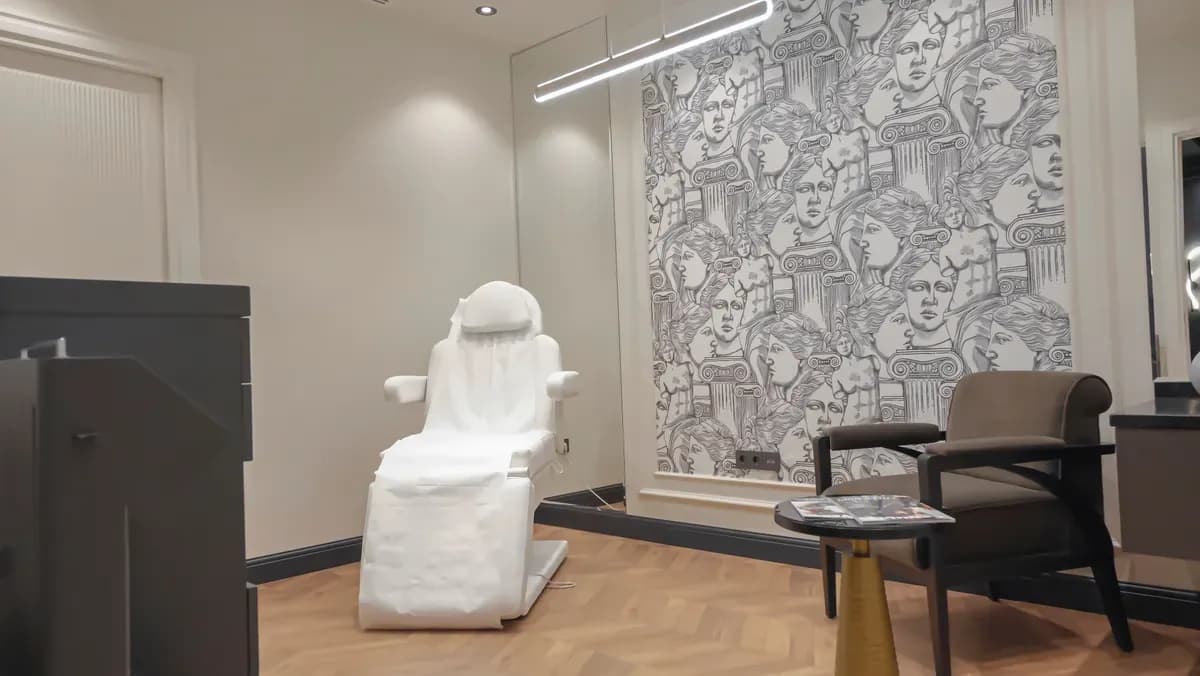
The practice in Ataköy 
Acıbadem Bakırköy Hospital 
Patient room 
Hotel room, on request
What does each option change, and what can it not change?
Two options in the table are surgery. A hair transplant is sometimes described as non-surgical because there is no long incision, but follicles are removed from the donor area and implanted at the hairline, and the International Society of Hair Restoration Surgery classes it as surgery. The grafts grow over months. Dr. Dilber does not perform hair transplants; if one is ever wanted, a hair-transplant clinic can do it about one year after forehead reduction.
Some products and clinics advertise forehead reduction without surgery, or forehead bone reduction without surgery. Neither exists. Massage, exercises, creams and devices do not move the hairline or reshape the brow bone, and fillers add volume rather than reduce it. Forehead reduction works on the scalp and hairline only: no bone is touched. The comparison with forehead reduction explains which suits which hairline.
What each option changes
Fringe, hair fibres or hairpiece
What it changes: How much forehead shows; look of density
What it does not change: Hairline position; needs daily upkeepBotox
What it changes: Brow position slightly; forehead lines
What it does not change: Hairline position or hairline-to-nose distanceFillers
What it changes: Volume where it is lacking
What it does not change: Forehead size or hairline positionHair transplant (surgery, done elsewhere)
What it changes: Adds hair; can bring the hairline forward gradually
What it does not change: Needs donor hair; result takes monthsForehead reduction (surgery)
What it changes: Lowers the hairline in one operation, visible straight away
What it does not change: Hair density; the bone is never touched
What if your hairline is still receding?
If your hairline has moved back in recent years, or the front is thinning, it helps to know why before choosing any option. The NHS advises seeing a GP before going to a commercial hair clinic. A hairline that keeps changing affects every choice on this page, surgical or not.
This matters for surgery too. Forehead reduction moves the hairline you have now; it does not stop genetic hair loss, and if the hairline keeps receding the scar can show later. Dr. Dilber asks about family hair loss and any hair-loss medicines when he reviews your photos and history. Some thinning along the frontal hairline or on the crown can appear around month 3 after surgery and mostly recovers by month 6. Women's hairline patterns are covered on forehead reduction for women.
When is surgery the only option?
If you want the hairline itself to sit lower, with your own hair, only surgery does that. Forehead reduction lowers it in one operation when the hairline is stable and the scalp moves enough; the candidacy guide explains both. The result shows straight away, hair length does not matter and the bone is never touched. Dr. Dilber performs it under general anaesthesia in 1.5 to 2 hours, with one night in hospital, and you can fly home on day 4 after the plaster comes off.
He examines you in person at his practice in Ataköy the day before surgery. Back home, you send photos on WhatsApp at 1, 3, 6 and 12 months; if a problem appears, send photos straight away and he advises on treatment and local care. Any cosmetic surgery carries risks. These include bleeding, infection, numbness, a visible or widened scar, hair loss along the incision, asymmetry and the need for revision. See the scar page.
Frequently asked questions
It can be made to look smaller, but not to be smaller. A fringe, hair fibres or a hairpiece change how much forehead shows. Nothing without an incision moves the hairline down or shortens the distance from the hairline to the nose root. If that distance is what bothers you, forehead reduction is the operation that changes it, with a result you see straight away.
Botox and fillers. Botox can soften forehead lines and lift the brows slightly; fillers add volume where it is lacking. Neither moves the hairline or makes the forehead smaller. Dr. Dilber's assistant presents your photos to him, and he tells you whether a non-surgical treatment, forehead reduction or neither fits your concern.
No. Botox can lift the brows slightly and smooth forehead lines, but the hairline stays where it is and the distance from the hairline to the nose root does not change. If you plan forehead reduction, have no Botox in the 6 weeks before surgery; it can be given again 1 month after. If low brows are part of your concern, a surgical brow lift is a separate option, explained in forehead reduction vs brow lift.
No. A hair transplant is surgery: follicles are removed from the donor area at the back of the scalp and implanted at the hairline, and the grafts grow over months. Dr. Dilber does not perform hair transplants. Forehead reduction moves the whole hairline in one operation, works with short hair and gives an immediate result. If a transplant is ever wanted, a hair-transplant clinic can do it about one year later.
No. Bone cannot be reshaped by massage, exercises, creams, devices or injections. The practice does not offer bone contouring, and forehead reduction does not change the bone: no bone is touched. It lowers the hairline by moving the scalp forward. If your concern is a prominent brow bone, Dr. Dilber tells you after reviewing your photos what forehead reduction can and cannot change.
Separate the two concerns. A sparse or uneven front may need a hair-loss check near home and, later, a hair transplant at a hair-transplant clinic. A high but stable hairline may suit forehead reduction. Send photos with your hair pulled back, and Dr. Dilber tells you which concern applies to you and what he would assess next.
No. The before and after photos Dr. Dilber shares show surgical results, each labelled with the operation and dates. A photo taken after surgery is not evidence of what a non-surgical option can do. For styling, fibres or a hairpiece, ask the hairdresser or practitioner for their own dated examples, taken in the same light and from the same angle.
Explore the practice
 About Dr. DilberTraining, hospital and how he works with patients from abroad.Read his profile →
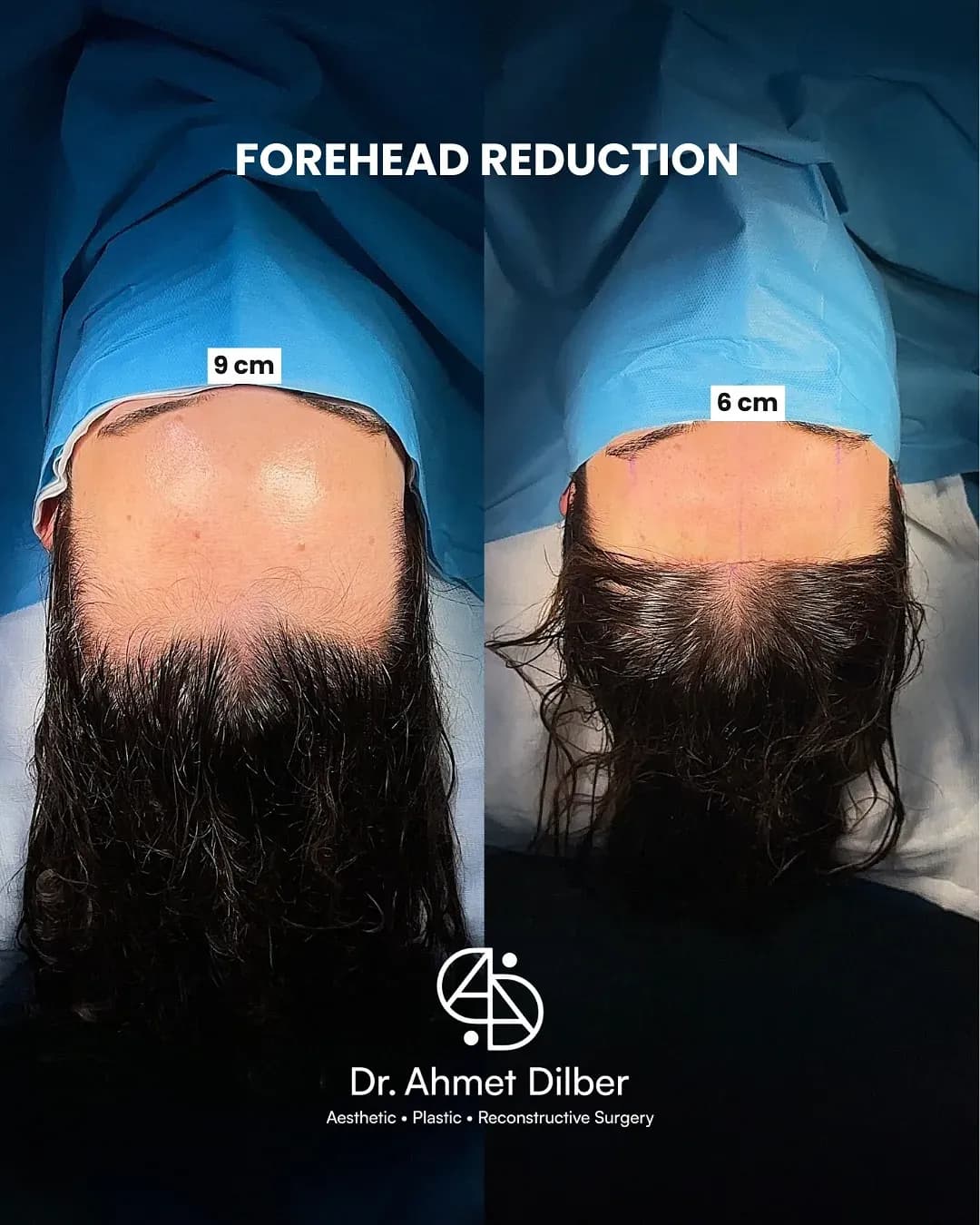 Before and after resultsBefore and after photos of Dr. Dilber's patients. Results vary.See the gallery →
 Patient guide (PDF)The guide we send every patient: timeline, medication, aftercare.Download the guide →
Not sure which applies to you? Send three photos.
Photograph your forehead from the front, left and right with your hair pulled back. Dr. Dilber tells you whether styling, Botox or fillers, or surgery fits your concern, and the team replies on WhatsApp.
